Variable Speed Pool Pumps: The Smart Choice for Arizona Pools
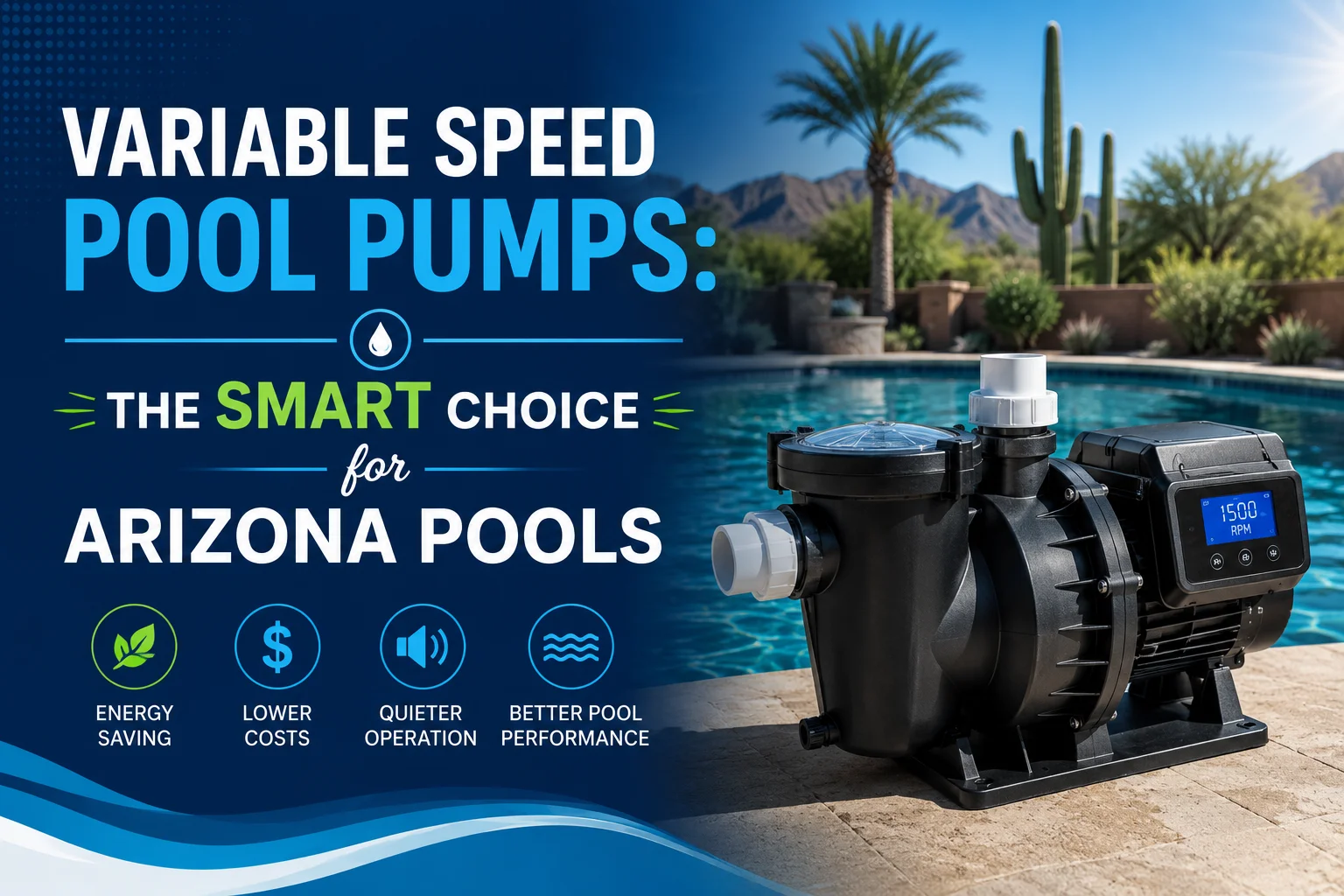
Arizona pool owners face a unique set of challenges: extreme summer heat, heavy monsoon debris, hard water that leaves scale, and many homes that use pools year-round. Upgrading to a variable speed pool pump can reduce energy costs, improve water clarity, and give you the flexibility to match pump performance to real-world conditions in the Valley or the high desert.
How variable speed pumps work — and why that matters
Traditional single-speed pumps run at one fixed RPM, usually higher than needed for everyday filtration. Variable speed pumps let you set the motor speed (or let an automation system do it for you) so the pump runs at lower speeds for routine circulation and higher speeds for tasks like vacuuming or powering water features. Because hydraulic power scales with the cube of speed, reducing RPM yields disproportionately large energy savings — and that difference adds up fast in Arizona when pumps run long hours.
Benefits for Arizona pools
Here are the advantages that matter most to Arizona homeowners.
Lower energy bills
Running your pump at lower speeds for more hours is generally cheaper than short bursts at full speed. In Arizona’s long swim season — and especially during hot months when you may run filtration longer to maintain water quality — a variable speed pump reduces electricity draw and can noticeably lower monthly bills.
Quieter equipment pad
Variable speed pumps produce less noise at reduced RPM. That’s useful in dense neighborhoods or for early-morning filter runs when you don’t want to wake the household or neighbors.
Better filtration and chemistry control
Slower, longer circulation gives filters a steady workload instead of heavy, inefficient surges. That steady turnover helps reduce chemical consumption and improves clarity — important in Arizona where chlorine degrades faster in heat and sunlight.
Flexibility for monsoon and yard debris
Monsoon season and sudden wind events can blow leaves, dust, and tumbleweeds into pools. With a variable speed pump you can temporarily increase flow after storms to help clear the filter and skimmer, then dial back for efficient maintenance circulation.
Sizing and runtime: practical guidance for Arizona households
Two practical goals drive pump selection: achieving required turnover and minimizing energy use. Turnover is the number of hours it takes the pump to circulate the entire pool volume — many homeowners aim for one full turnover in 8–10 hours, though families with heavy use or local health code requirements may set different targets. Because pools in Arizona often lose more water to evaporation and receive more bather load during hot months, increasing circulation slightly in summer can help sanitation.
General guidance for runtime and speed:
- Run the pump at a low speed 8–12 hours daily for routine filtration and chemical distribution. Lower RPMs often need longer run times but use much less energy.
- Use medium speeds for regular cleanup or after heavy use.
- Switch to high speed only for vacuuming, backwashing (if you have a sand or DE filter), or powering waterfalls and spas.
Work with a local pool professional to size the pump and set speeds: piping length, filter type, and elevation changes around the Valley affect the flow you’ll actually get at each RPM.
Installation and compatibility
Most modern variable speed pumps replace older pumps without major plumbing changes, but check electrical and control requirements first. Many need a dedicated 230V circuit and may be compatible with home automation or pool controllers. If your pool has older plumbing, valves, or undersized lines, a new high-efficiency pump might highlight restrictions — your installer should verify plumbing, suction line condition, and skimmer capacity to avoid cavitation or poor performance.
Cost, savings, and rebates
Upfront cost for variable speed pumps is higher than for single-speed units, but lower operating costs typically return the investment over time. Savings depend on local electricity rates, pump runtime, and how the pump is used. Arizona homeowners should check with their electric utility for efficiency rebates—many utilities and municipalities offer incentives for high-efficiency pool equipment, and availability changes periodically.
Before buying, ask for a simple payback estimate from your installer that reflects your actual utility rate and typical daily run hours. Avoid sellers who promise exact dollar savings without reviewing your pool’s specifics.
Maintenance tips for Arizona conditions
Arizona’s environment influences how you care for a variable speed pump:
- Protect from heat: Place the pump in shade or use a ventilated enclosure. Pumps can run hotter in unshaded equipment pads, shortening component life.
- Watch for monsoon debris: Clean skimmer baskets and pre-filters after storms to prevent leaves and gravel from stressing the pump and filter.
- Hard water and scale: Hard water common across Arizona increases scale risk on impellers and inside hair-and-lint traps. Maintain calcium and pH balance and inspect equipment regularly.
- Check seals and unions: High temperatures and UV can dry out seals; inspect for leaks and replace worn o-rings promptly.
Common pitfalls to avoid
Choosing the right pump and using it correctly avoids expensive mistakes:
- Don’t oversize for horsepower alone—match pump performance (flow at given head) to your plumbing and filter system.
- Avoid running at very low RPMs if suction lines are clogged or undersized; low flow can cause debris to settle or strain skimmers.
- Confirm compatibility with existing automation or control systems before purchase.
FAQ
How long should I run my variable speed pump each day in Arizona?
For most Arizona pools, plan on 8–12 hours of lower-speed circulation daily as a baseline. Increase runtime or speed after heavy use, during hot spells, or following monsoon storms. Have a local pro calculate required turnover for your pool volume and usage.
Will a variable speed pump save me money?
Yes—if you use it correctly. Running longer at lower speeds typically costs less than brief runs at full speed. The actual savings depend on your electricity rate, runtime, and whether you replace an inefficient older pump.
Are variable speed pumps noisy?
At low speeds they are much quieter than single-speed pumps. Noise increases with RPM, so routine circulation at lower speeds is typically unobtrusive for neighbors and households.
Can I install a variable speed pump myself?
If you’re comfortable with pool plumbing and electrical work and follow local electrical codes, some homeowners install their own pumps. Because of 230V wiring and potential code/permit issues, most Arizona homeowners use a licensed electrician and a pool professional for installation.
Do utilities in Arizona offer rebates?
Many utilities periodically offer rebates for energy-efficient pool equipment. Check your local utility or city website for current programs and qualification rules before purchasing.
Thinking about an upgrade? Explore AZ Pool Advisor for practical guides and help finding trusted local pool companies who know Arizona conditions. Our site collects resources to help you compare installers, understand rebates, and set pump speeds that suit your home and climate.