Pool Algae Types: Identify, Treat, and Prevent Algae in Arizona Pools
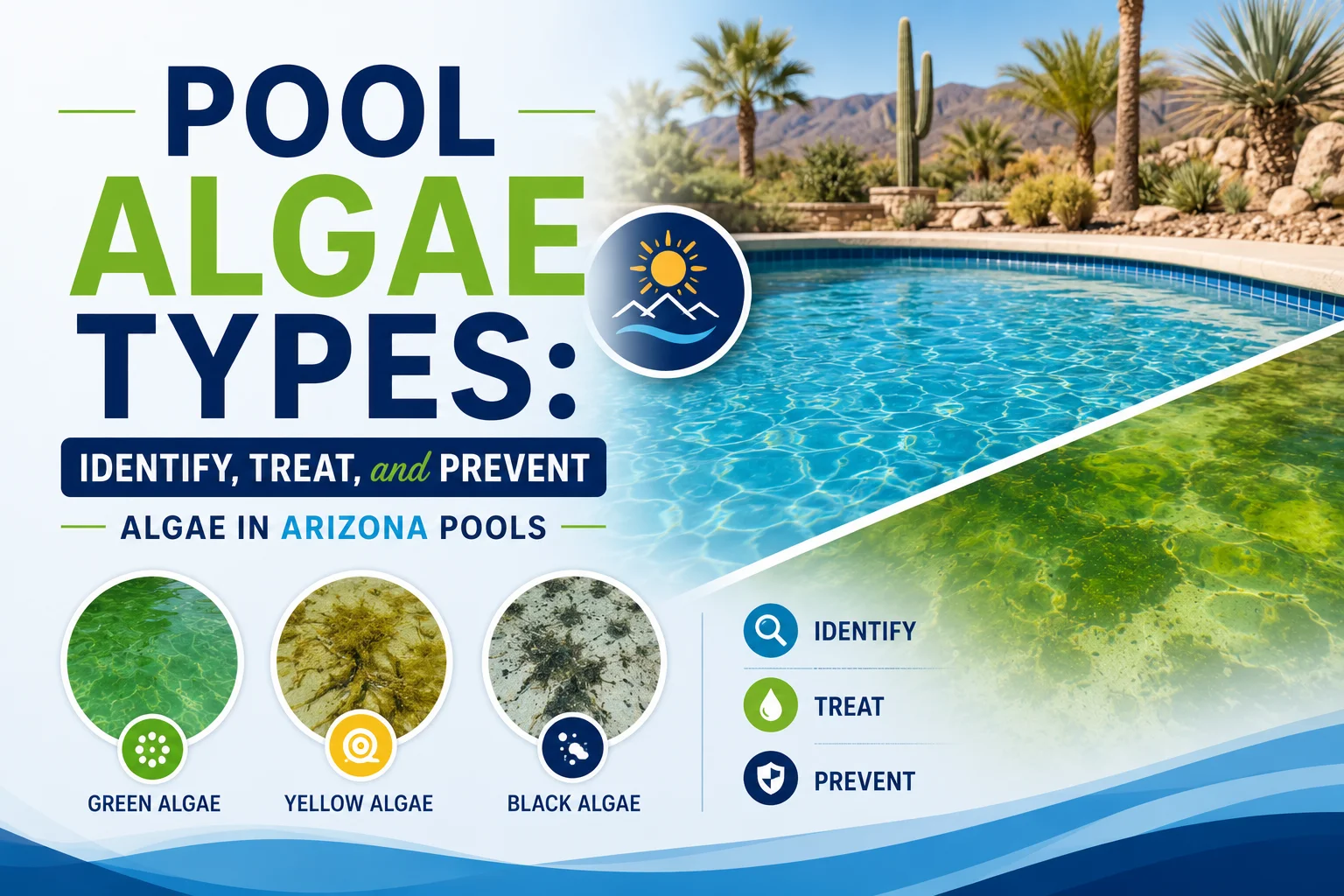
Algae is one of the most common and visible pool problems Arizona homeowners face. High summer heat, rapid chlorine loss, monsoon dust and debris, and hard water all make local pools prime real estate for algae to take hold. This guide walks through the common pool algae types, how to identify them, practical treatment steps you can do yourself, and prevention tips that work in Arizona’s climate.
Why Arizona Pools Are Prone to Algae
Arizona conditions combine several risk factors: intense sunlight speeds chlorine breakdown, hot water temperatures encourage algae growth, and regular monsoon storms drop organic debris and dust that can seed pools. Hard water and scale can also create rough surfaces where algae spores attach and hide. Many homeowners use pools year‑round here, so algae can show up any month if sanitizer and circulation lapse.
Common Pool Algae Types and How to Recognize Them
Green Algae — The Most Common
Description: Bright to dark green cloudy water or fuzzy growth on walls and steps. Green algae floats and multiplies quickly.
How it behaves in Arizona: Warm summer temperatures let green algae bloom rapidly — sometimes in 24–48 hours after sanitizer drops — especially if the pump is running too little or leaves and dust accumulate after monsoon storms.
Yellow/“Mustard” Algae
Description: Yellow‑brown or mustard‑colored powdery spots on shallow surfaces, especially in shaded niches and concrete crevices.
How it behaves in Arizona: Mustard algae prefers warmer, shallow areas and can tolerate lower sanitizer levels. It often shows up after heavy dust or when pools sit under trees during windy monsoon periods.
Black Algae — The Stubborn One
Description: Small, dark black or bluish‑black spots tightly bonded to plaster, grout, or rough surfaces. Black algae forms deep roots that stain plaster and resist routine chlorination.
How it behaves in Arizona: Black algae is hardest to knock out, especially where calcium scale or rough plaster gives it a place to anchor. Heat doesn’t deter it — if you see black spots, expect a multi‑step removal process.
Pink Slime — Not a True Algae
Description: Pink or reddish slippery film on pool surfaces, pump baskets, or behind fittings. It’s actually bacteria and other microbes forming a biofilm, not true algae.
How it behaves in Arizona: Warm water and organic debris create perfect conditions for these bacteria. Because it’s a biofilm, physical scrubbing plus sanitation is needed to remove it.
How to Treat Different Algae Types — Practical Steps
Before starting treatment, test and balance your water (pH, total alkalinity, and sanitizer). Balanced water makes chemical treatments work more effectively.
Green Algae: Shock, Brush, Filter
- Brush all surfaces thoroughly to break algae loose.
- Shock the pool according to product directions and label instructions until the water clears; follow safety guidance on handling and dosing. Repeat if necessary.
- Run the filter continuously while the algae clears; clean or backwash the filter often to remove captured algae.
Mustard (Yellow) Algae: Aggressive Brushing and Algaecide
Mustard algae often requires persistent brushing of shallow areas and a targeted algaecide in addition to shocking. Because it clings in crevices, make sure the brush reaches corners and steps, and keep the pump and filter running until the water clears.
Black Algae: Scrub, Treat, and Repeat
Black algae frequently requires physical agitation — scrub with a stainless steel or heavy plaster brush — and spot treatment with an algaecide formulated for black algae. In many cases you’ll need to repeat treatments and clean the filter thoroughly. If black spots persist, consult a local pool professional because deeper staining or plaster damage can occur.
Pink Slime: Scrub and Sanitize
Physical removal is critical for pink slime. Scrub returns, skimmer baskets, and any film‑covered surfaces, then shock and run the circulation system. Enzyme products and regular filter cleaning help prevent regrowth.
Filtration and Equipment: Don’t Skip These Steps
Algae removal depends on circulation and filtration. In Arizona summers run your pump long enough to keep water moving — many homeowners run pumps daily for extended hours during extreme heat. Backwash or clean filters frequently during and after an algae event since captured algae can reintroduce spores if left in the filter. Check skimmer baskets, clean the pump strainer, and inspect return fittings and lights for film buildup.
Arizona-Specific Prevention Tips
Prevention is easier (and cheaper) than treatment. These Arizona‑tailored tips reduce algae risk year‑round:
- Keep sanitizer and pH in the target ranges recommended on your test kit and product labels; check more frequently during summer heat and after monsoon storms.
- Run your circulation system longer on very hot days and during monsoon season to reduce stagnant zones and to help chlorine oxidize contaminants.
- Brush the pool weekly — Arizona dust and pollen settle fast, and brushing prevents spores from finding hiding spots.
- Trim overhanging trees and clear debris after storms to cut the organic load that feeds algae.
- Maintain clean, smooth surfaces. Heavy scale and rough plaster give algae places to root; treat scale promptly and consider professional resurfacing if algae repeatedly returns in the same spots.
- Use a pool cover when the pool won’t be used for extended periods (exercise caution with covers during monsoon winds and secure them properly).
When to Call a Local Pool Pro
If algae returns after multiple treatments, if you see stubborn black spots, or if the pool water will not clear after following product directions, contact a licensed Arizona pool service. Professionals have access to specific products and tools (advanced filtration cleaning, stain removal, and surface repair) and can diagnose contributing problems such as poor circulation, equipment failure, or plaster damage.
Safety and Swimming During Treatment
Follow label directions for all chemicals. Many shock treatments and algaecides require no swimming while chlorine and combined chlorine are elevated — check the product label. If you’re treating an active algae bloom, keep kids and pets out of the pool until the water has cleared and chemical levels are back in the safe range on your test strips.
Final Thoughts for Arizona Pool Owners
Algae is a predictable nuisance in Arizona, but with regular testing, good circulation, consistent brushing, and quick cleanup after monsoon events you can keep it from becoming a recurring headache. When in doubt, document what you tried (test results, products used, and how long you ran the pump) and get a professional opinion — that record helps technicians diagnose persistent issues faster.
Frequently Asked Questions
Q: How fast can algae take over a pool in Arizona?
A: In hot, poorly circulated water with low sanitizer, algae can become visible in 24–48 hours. Regular testing during summer reduces this risk.
Q: Can I swim while treating algae?
A: Not usually. Many shock treatments and algaecides require that you avoid swimming until chlorine and other chemicals return to safe levels. Always follow product labels and re‑test before swimming.
Q: Are saltwater pools immune to algae?
A: No. Salt chlorine generators still produce chlorine that can be consumed by heat and organic load. Salt pools need the same circulation, brushing, and testing attention as traditional chlorine pools.
Q: Will algaecide alone fix my problem?
A: Algaecide can help, but it usually works best combined with proper shock, brushing, and filtration. For black algae and heavy blooms, mechanical scrubbing and repeated treatments are often needed.
Q: How can I prevent algae after a monsoon storm?
A: Remove debris quickly, test and adjust sanitizer and pH, and run the pump long enough to clear suspended particles. A short shock after heavy debris can prevent blooms from starting.
Want Arizona‑specific help? Explore AZ Pool Advisor for practical guides, maintenance checklists, and local pool companies trusted by homeowners across the state. If algae is persistent or you prefer hands‑off service, use our site to request estimates from vetted local pros who know how Arizona conditions affect pool water year‑round.