Now Reading: How to Remove Calcium from Pool Tile (Arizona Homeowner’s Guide)
-
01
How to Remove Calcium from Pool Tile (Arizona Homeowner’s Guide)
How to Remove Calcium from Pool Tile (Arizona Homeowner’s Guide)
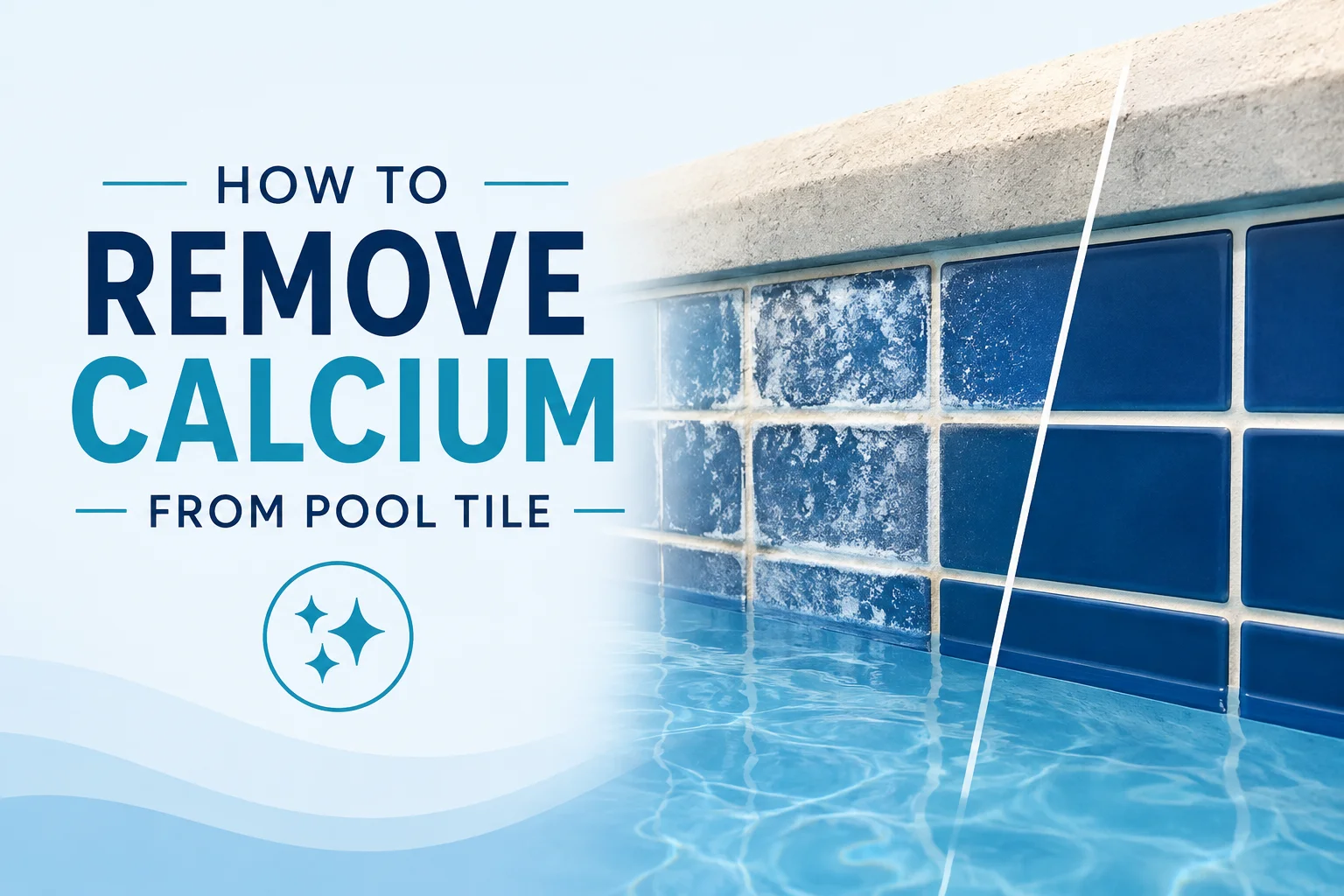
White, chalky or crusty deposits on pool tile are usually calcium scale. In Arizona, hard tap water, extreme evaporation and seasonal debris make scale a common problem. Left untreated, heavy calcium buildup looks bad and can hide grout damage or lead to tile delamination. This guide shows Arizona homeowners safe, effective ways to remove calcium from pool tile, when to call a pro, and how to prevent the problem from coming back.
Recognize calcium scale vs. other stains
Before you start scrubbing, be sure the stain is calcium and not efflorescence, paint, algae or mineral staining:
- Calcium scale: white or off-white, hard, can appear as thin crusts or thick flaking patches.
- Algae/organic stains: green, black, or brown and soft—treat with normal algaecide routines.
- Metal stains: rust-colored or blue/green—need a chelating cleaner or metal remover.
If you’re unsure, test a small hidden area first or have a pool tech identify the deposit.
General safety and Arizona considerations
Work safely: wear chemical-resistant gloves, eye protection and a respirator if using strong acids. Always add acid to water—not water to acid—when diluting. Keep children and pets away while you work. In Arizona, high temperatures speed chemical reactions and evaporation, so plan cleaning for early morning or late evening. During monsoon season, clean tiles sooner after storms—dust and alkaline dust can accelerate scale when wet and then concentrated by evaporation.
Step-by-step: Remove light calcium scale (do-it-yourself)
For light deposits or regular maintenance, try these safer, non-professional methods first.
1. Mechanical cleaning
Start with the least aggressive option.
- Brush: Use a stiff nylon brush (not wire) to loosen scale. Brush along the grout lines and tile face.
- Pumice stone: On ceramic or porcelain tile, a wet pumice stone can remove small spots. Test on a small area—pumice can mar some glazed finishes or softer stone.
- Razor blade or grout scraper: Only for tile above the waterline and with care—scrape gently at a low angle to avoid scratching.
2. Pool-safe commercial cleaners
There are commercially made scale removers and tile cleaners formulated for pool use. Use a product labeled safe for pool interiors, follow the instructions, and rinse well. Many of these products are gel or paste formulas that cling to vertical tile and are less likely to run into the pool water.
When to use acid (and when not to)
Stubborn, thick scale often requires an acid-based approach. Muriatic acid or specially formulated calcium removers work, but acid is hazardous and can damage certain tile types—especially natural stone, some glass tiles, and older colored glazes. If tile is natural stone (travertine, limestone, slate) or you have decorative glass mosaic, skip DIY acid and hire a professional.
Safe acid-use practices
- Only use acid if the tile manufacturer or a pool professional says it’s safe for that tile.
- Work in a well-ventilated area and avoid midday heat; in Arizona, early morning is best.
- Protect the pool water: use plastic sheeting to prevent acid runoff from entering the water, and have a neutralizer (baking soda) and lots of water for rinsing.
- Apply diluted acid in a small area at a time, scrub gently, then rinse thoroughly before letting runoff reach the pool.
If you’re uncomfortable with acid or the deposits are extensive, hire a licensed pool tile restoration company. A professional acid wash or mechanical restoration will protect tile and equipment.
Severe scale: acid wash or tile restoration
When scale covers large areas, flakes deeply into grout, or tile is lifting, an acid wash or professional tile restoration is often the correct solution. Experts use controlled acid application, mechanical grinders, or diamond polishing for delicate tile types. In Arizona, technicians also account for water replacement needs and local water-use restrictions if a full drain is required.
Prevention: control water chemistry and habits
Preventing scale is easier than removing it. In Arizona, it’s especially important because high evaporation concentrates minerals and monsoon dust adds alkalinity. Key prevention steps:
- Balance pH and alkalinity. Aim for pH around 7.4–7.6 and total alkalinity in a stable range (consult your test kit or local pool pro for exact targets depending on your pool surface).
- Monitor calcium hardness. If hardness is consistently high, consider partial drain-and-refill—be mindful of local water restrictions and Arizona refill costs.
- Use a scale inhibitor (sequestrant) regularly to keep dissolved minerals from crystallizing on tile.
- Maintain circulation and filtration—stagnant water at edges allows scale to form more quickly.
- Rinse patio or planters and keep dusty debris away from the pool—monsoon dust is alkaline and contributes to scaling when it gets wet and then evaporates.
Tile types and special notes
Know what tile you have. Ceramic and porcelain tiles tolerate more aggressive cleaning than soft natural stone or some glass mosaics. If your tile manufacturer’s care instructions are available, follow them. If tile is older or decorative, get a professional assessment before using acids or abrasive tools.
Hiring help: what to ask a pool pro
If you choose a professional, ask:
- Have you restored this tile type before? Ask for before/after photos.
- Will you use acid, mechanical grinding, or polishing? How will you protect the pool interior and water?
- Do you carry insurance and a warranty for tile work?
- How do you dispose of rinse water, and will you comply with local water-use rules?
Arizona-specific tips
Because Arizona faces extreme heat, rapid evaporation, hard municipal water, and seasonal monsoon debris, keep your chemistry checked weekly in summer and after heavy storms. Scale can form faster when water levels drop and minerals concentrate around tile lines. A little regular maintenance—brushing, sequestering agent monthly, and timely treatment after storms—goes a long way.
Final checklist
- Identify the deposit—confirm it’s calcium scale.
- Try mechanical and pool-safe cleaners first.
- Use acid only if tile type allows and follow strict safety protocols.
- If in doubt or if scale is severe, hire a licensed pro experienced with Arizona pools.
- Prevent recurrence with balanced chemistry, scale inhibitors, and regular brushing—especially after monsoon storms.
Explore more Arizona pool help
If you need more localized advice or want help finding trusted tile restoration or pool service companies in Phoenix, Tucson, Scottsdale or anywhere in Arizona, explore AZ Pool Advisor for practical how-tos, service directories and local company profiles. Our goal is to help Arizona pool owners keep water clear, tile clean, and equipment protected—even in our harsh desert climate.
FAQ
Is white scale dangerous to pool surfaces?
Scale itself isn’t toxic but it can trap dirt, hide grout cracks, and cause tile to lift if it grows under the finish. Address scale promptly to avoid cosmetic and structural problems.
Can I use household vinegar to remove calcium deposits?
Household vinegar (acetic acid) may help very light deposits but is usually too weak for stubborn pool calcium. For tougher scale, a commercial pool tile cleaner or a trained pro is more effective.
How often should I check for calcium buildup in Arizona?
Check tile monthly during hot months and after monsoon storms. Increase frequency if you have very hard water or notice water-level swings from evaporation.
Will a partial drain help reduce calcium hardness?
A partial drain and refill can lower calcium hardness if your source water is softer than the pool water. Check local water-use rules and consider the cost of refilling in Arizona before you drain.
For chemical instructions and exact dilution rates, always follow product labels and safety data sheets. If you suspect tile is damaged beneath the scale or you have natural stone tile, engage a licensed tile restoration company.
Looking for a local expert? Visit our directory to find trusted Arizona pool companies and practical guides to keep your pool tile and water in top shape year-round.

Brandon LaVere is a local pool owner based in Chandler, Arizona, with firsthand experience dealing with the challenges that Arizona heat, hard water, algae growth, and pool maintenance can create for homeowners. Through AZ Pool Advisor, Brandon shares practical pool care tips, real-world experiences, and Arizona-focused advice designed to help homeowners better understand and maintain their swimming pools throughout the year.

Previous Post
Next Post