Pool Fence Options for Arizona Homes: Safety, Style, and What Works in Our Climate
Fencing a pool in Arizona is more than a code checkbox — it’s a safety investment and a landscape decision that must stand up to blistering summer heat, hard water mineral stains, monsoon winds and debris, and year‑round use. This guide walks Arizona homeowners through the most common pool fence options, what performs best in our climate, and practical installation and maintenance tips so your barrier stays safe and attractive for years.
Why your pool fence choice matters in Arizona
Arizona’s climate creates specific demands on pool fencing. UV exposure and high surface temperatures can fade or warp inferior materials. Hard water and mineral spray can leave visible deposits on glass and metal. Monsoon storms push dust and branches that test fence strength and hardware, while year‑round pool use means the fence should be low‑maintenance and durable. When choosing a fence, balance safety, local rules (city and HOA), visibility, and material durability.
Common pool fence types and how they perform in Arizona
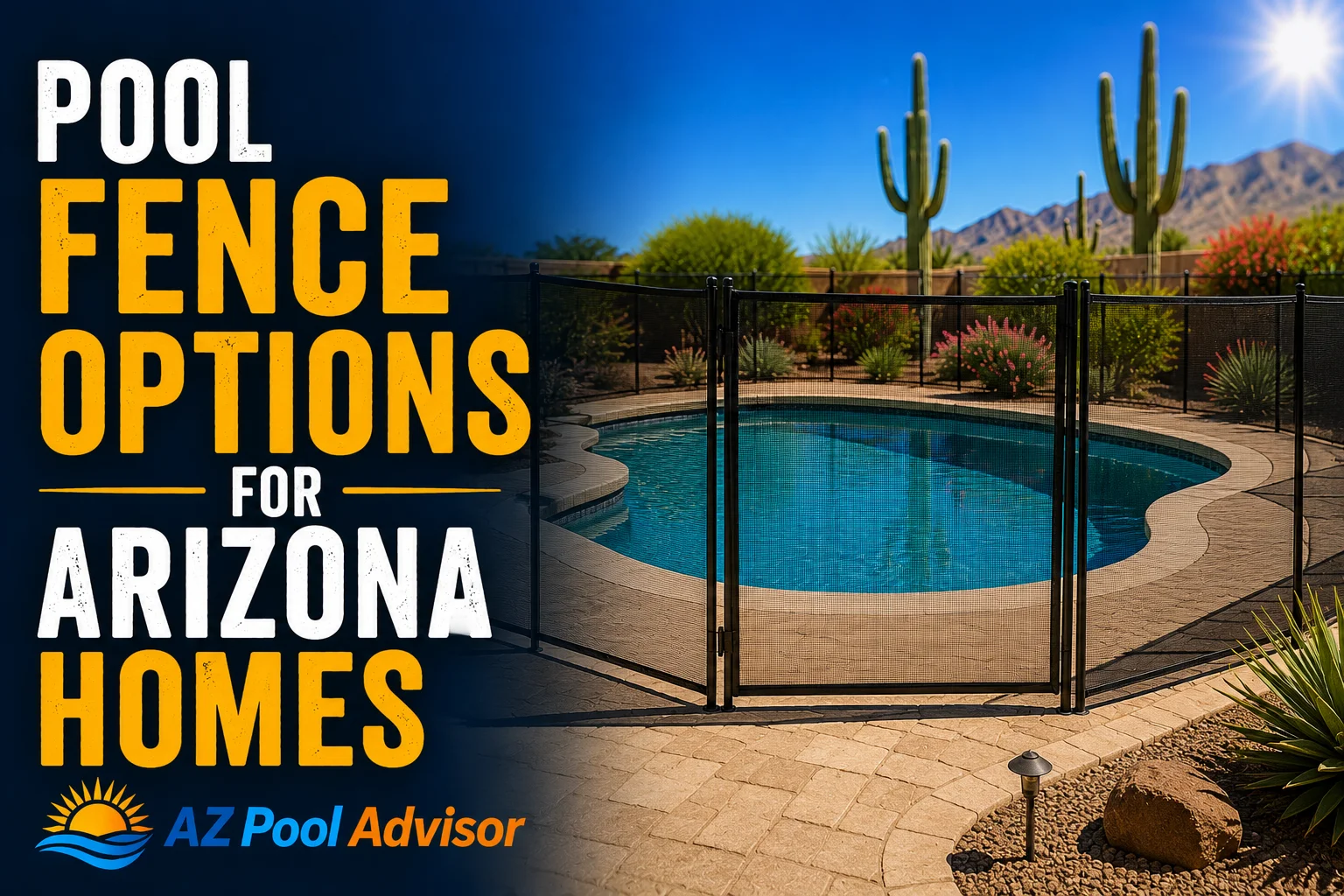
Mesh (removable/temporary) safety fences
Overview: Mesh pool fencing is a popular child-safety option because it’s removable, nearly invisible, and can be installed inside the pool deck or on top of coping.
Pros: Good visibility, avoids a permanent change to yard aesthetics, and mesh panels are cooler to touch than metal in summer. Many are designed to be self‑closing and self‑latching when installed with gate kits.
Cons: UV exposure and heat can weaken low‑quality mesh over time; look for products rated for strong Arizona sun and replace worn straps and anchors after several seasons. Mesh does little to block wind-driven monsoon debris.
Aluminum and powder‑coated metal fences
Overview: Aluminum picket fences (often with vertical pickets and open spacing) are a common, durable choice around Arizona pools.
Pros: Lightweight, rust‑resistant (especially when powder coated), and long-lasting. Strong wind and debris usually won’t damage a properly installed aluminum fence.
Cons: Metal can become hot to the touch during peak summer. Choose darker or matte powder coats that resist fading and consider adding top caps or inserts to reduce heat on handrails.
Wrought iron
Overview: Wrought iron is sturdy and offers a classic look, but it requires more maintenance in exposed climates.
Pros: Extremely strong and secure, good for areas with high wind or where a higher fence is needed for privacy or safety.
Cons: Iron can rust when exposed to mineral‑rich pool water and irrigation overspray; plan for periodic repainting and choose corrosion‑resistant finishes and stainless fasteners.
Glass pool fencing
Overview: Frameless or semi‑framed tempered glass panels give an unobstructed view of the pool and backyard — a favorite for modern builds.
Pros: Excellent sightlines for supervising kids and swimmers, attractive, and wind‑resistant when correctly installed.
Cons: Hard water spotting and mineral deposits are very visible on glass. Regular cleaning and a good water‑spot treatment are essential. Glass panels also require strong anchoring for monsoon winds and professional installation to meet safety standards.
Vinyl/PVC fencing
Overview: Solid or picket-style PVC fencing is low‑maintenance and won’t rust.
Pros: Resists rot and insect damage, doesn’t need painting, and holds up to most pool chemicals.
Cons: Lower-grade vinyl can warp or yellow under intense sun. Choose UV‑stabilized products and watch for heat expansion in long runs; proper spacing and sturdy posts prevent sagging.
Masonry and block walls
Overview: A full masonry wall provides privacy, sound reduction, and a permanent barrier around a pool area.
Pros: Durable, blocks wind and monsoon debris, and adds privacy. Masonry is a good choice when you want a complete backyard enclosure or have HOA rules that favor solid walls.
Cons: Hot surfaces from masonry exposed to sun, potential for higher installation cost, and a solid wall may require additional safety measures like a secondary barrier or gate to meet pool safety expectations.
Gate hardware, latches and safety features
Whatever material you choose, gates and hardware determine whether a fence actually performs. Look for self‑closing and self‑latching hardware designed so the latch is out of a small child’s reach. Latches and hinges should be stainless or marine‑grade to resist mineral staining and corrosion. Consider secondary layers of protection: pool alarms, door alarms for rooms that open to the pool, and motion‑activated lighting that improves nighttime visibility.
Arizona installation considerations
Permits and codes: City and HOA rules vary — some communities allow certain fence types only, others require specific gate hardware. Always check local building codes and HOA guidelines before buying or installing a fence.
Anchoring & wind loads: Monsoon wind and debris require strong post installation and concrete footings. For areas with frequent landscaping irrigation overspray, avoid materials and hardware that corrode quickly.
Pool decking and coping: If you have tile or travertine coping, take special care with post installation so you don’t crack stone or damage tile. A reputable installer will plan post placement and use protective pads and proper drilling techniques.
Maintenance tips for Arizona pool fences
– Clean glass panels weekly during monsoon season and after dust storms to prevent mineral etching. Use a non‑abrasive cleaner made for hard water stains.
– Rinse and inspect metal and PVC fences after irrigation overspray to remove minerals and prevent buildup.
– Replace anchors and tighten hardware annually; UV exposure shortens the life of straps and gaskets on removable mesh fences.
– Recoat or touch up metal finishes as needed to prevent corrosion where mineral spray contacts fasteners.
How to choose the right fence for your yard
1) Prioritize safety first — choose a fence and gate hardware that will reliably prevent unsupervised pool access.
2) Match material to lifestyle — families with small children may prefer mesh or clear sightlines; homeowners focused on privacy may opt for masonry or tall vinyl panels.
3) Factor climate durability — pick UV‑stabilized, corrosion‑resistant finishes and stainless hardware suitable for Arizona’s hard water and strong sun.
4) Hire a local installer — look for companies experienced with Arizona soils, monsoons and local code requirements. Get multiple estimates and ask for references and proof of insurance.
Budgeting and lifespan
Costs vary widely by material, height, and whether you need gates, electrical components, or custom masonry. Think in terms of long‑term value: a slightly higher upfront cost for powder‑coated aluminum or tempered glass with proper hardware often beats repeated repairs on cheaper materials that fail under Arizona conditions.
FAQ
Do I legally need a pool fence in Arizona?
Requirements depend on city ordinances and HOA rules. Many Arizona jurisdictions have specific pool barrier requirements; check your local building department and HOA before you install to ensure compliance.
Which fence type is easiest to maintain in Arizona?
Vinyl/PVC and powder‑coated aluminum are generally low‑maintenance. Glass looks great but needs frequent cleaning to remove hard water deposits; iron requires periodic repainting in mineral‑heavy environments.
Will a fence block monsoon debris?
Solid walls and vinyl panels block wind and debris better than mesh or open‑picket fences. However, solid barriers can create hot microclimates and block airflow, so balance debris protection with ventilation and landscape planning.
How often should I inspect my pool fence?
Visual inspection every season and after major storms is a good habit. Check posts, anchors, gate operation and latch function. Replace worn mesh straps and tighten or replace corroded hardware promptly.
Next steps
Choosing the right pool fence in Arizona means matching safety, style and materials to our unique climate. Start by checking local code/HOA rules, then get at least two local estimates from companies familiar with Arizona conditions. Explore AZ Pool Advisor for practical guides and trusted local pool companies to help you pick and install a fence that protects your family and holds up to Arizona heat, dust and monsoon seasons.