Best Pool Cleaning Products 2026: Arizona Homeowner Picks
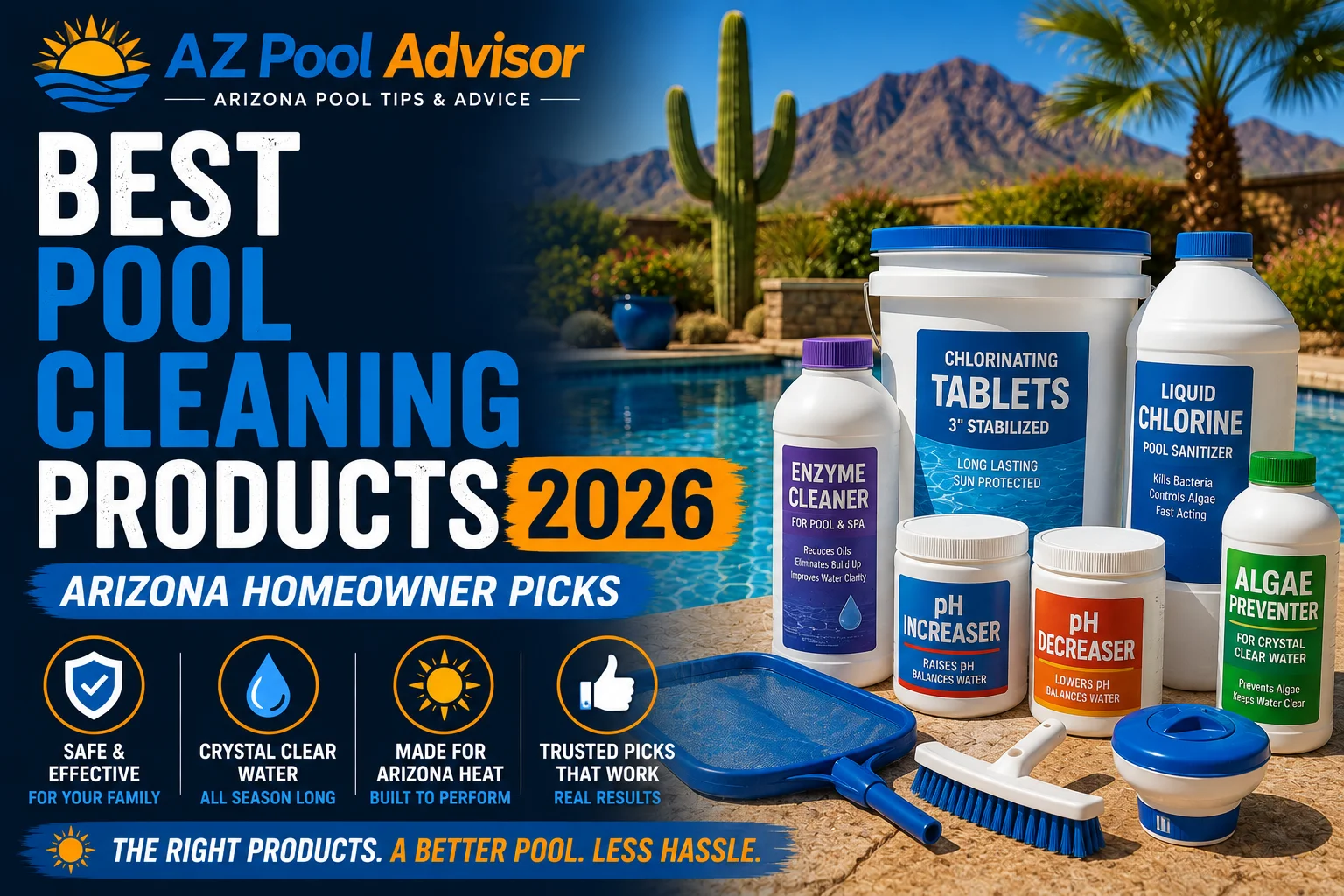
Arizona pools face a unique set of challenges: extreme summer heat that speeds up chlorine loss, hard water and calcium build-up, and seasonal monsoon debris that can overwhelm filters overnight. The right tools and chemicals cut the time you spend chasing problems and keep your water safe and swim-ready year-round. Below are dependable categories and top product types for 2026, plus Arizona-specific tips so your choices work for valley heat, dust and inside-the-gate mesquite leaves.
Why product choice matters for Arizona pools
High water temperatures and long sun exposure increase chlorine demand and speed chemical reactions that consume sanitizer—so you’ll often need stronger or more frequent treatments than a neighbor in a cooler climate. Heavy dust, pollen and monsoon leaves also mean surface-skimming and fine filtration are more important here than in many other states. Choose cleaning solutions that handle fine particles, scrub surfaces that collect calcium or algae, and survive frequent use without needing constant replacement. For the science behind faster chlorine decay in heat, see industry guidance and recent reviews.
Top product categories (and what to buy in 2026)
Robotic pool cleaners — best for time savings and fine debris
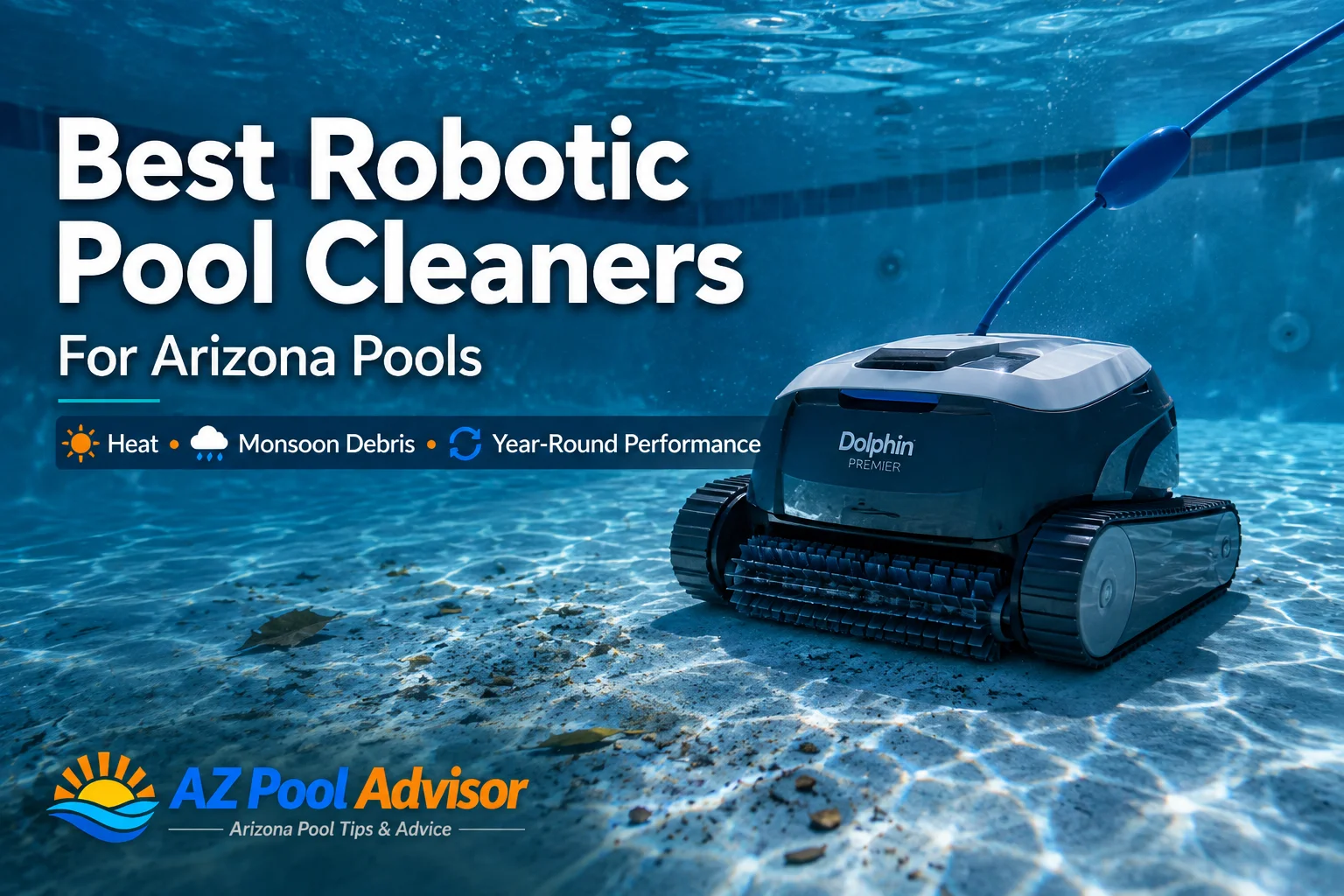
Robotic cleaners have become the go-to for busy homeowners who want frequent, effective cleaning with minimal effort. Modern robots scrub floors, climb walls and trap very fine debris (down to a few microns) so they remove the algae and dust a sand filter can miss. If you want automatic, hands-off maintenance, look at current high-rated robotic models from established brands; recent buyer guides and reviews for 2026 highlight reliable Dolphin models and other top robots as excellent choices. Robotic cleaners are especially useful in Arizona for daily dust and pollen removal during summer and monsoon season.
Suction- and pressure-side cleaners — budget-friendly backup
If budget or pool layout prevents a robot, suction- or pressure-side cleaners still move a lot of debris without heavy manual work. They work off your pump and are a good supplement during leaf-heavy monsoon days, but they generally don’t filter the finest particles the way robots do. Use a leaf canister on the return line or add a skimmer sock to protect the pump from large loads. (See product selection tips below.)
Hand tools: nets, brushes and poles — essential Arizona basics
Don’t underestimate a quality leaf skimmer and an 18–24” brush. For heavy monsoon debris, a wide, heavy-duty leaf net with fine mesh reduces the amount of material that sinks to the bottom. For surfaces, choose the brush material to match your finish: stainless-steel or combination bristles for gunite and plaster, and soft nylon for vinyl/fiberglass to avoid scratching. Recent 2026 roundups of pool brushes and leaf nets list several heavy-duty stainless options and professional-grade leaf skimmers ideal for large, dusty yards. Regular brushing prevents algae hotspots and breaks up calcium deposits before they become stains.
Shocks, algaecides and clarifiers — chemicals that really matter
Choosing the right shock matters in 120°F-plus Arizona heat. Calcium hypochlorite (cal-hypo) and dichlor remain common choices: cal-hypo is fast and powerful for green pools, while dichlor is stabilizer-friendly and dissolves cleanly. Non-chlorine (potassium monopersulfate) shocks are useful when you need to oxidize without raising chlorine. Authoritative 2026 reviews list top shocks and explain when each type is appropriate. For algae prevention and treatment, polymer and copper-free liquid algaecides can help protect between shocks; clarifiers and flocculants remove fine suspended particles after treatment. Always follow label directions and safety guidance.
Test kits and meters — don’t guess, measure
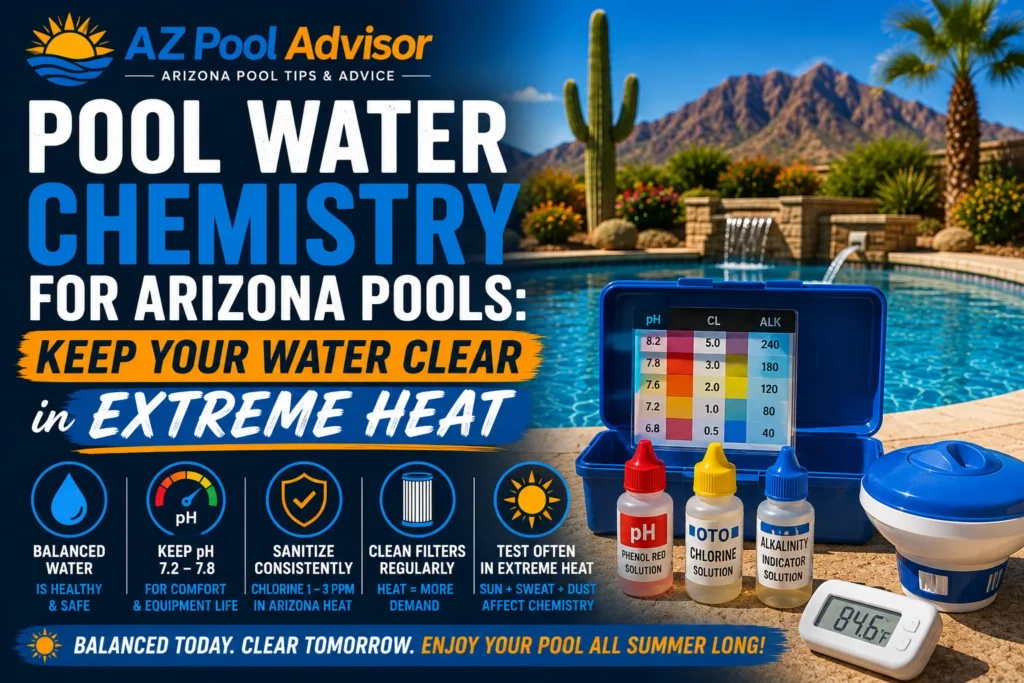
Accurate testing is the backbone of good pool care. The Taylor FAS-DPD test kits (the K-2006 family) remain the industry benchmark for accurate free chlorine measurement and are widely recommended by pros; digital photometers like the LaMotte ColorQ Pro series are a strong choice if you prefer a digital readout. Strips are convenient for daily spot checks, but rely on a liquid kit for precise adjustments—especially in hard water and when managing cyanuric acid (stabilizer) after long sun exposure.
Filter maintenance and stain removers
Arizona’s hard water and calcium deposits mean regular filter cleaning and periodic descaling matter. Use a quality filter cleaner (alkaline or acid-based depending on filter type) and a stain remover formulated for iron and calcium if you spot brown or white deposits. If your pool runs on a salt chlorine generator, follow manufacturer guidance for cell cleaning to avoid premature failure.
How to prioritize purchases for Arizona pools
1) Test kit first: accurate measurement prevents unnecessary chemical overuse.
2) Skimmer net + brush: cheap, immediate impact on water quality and algae control.
3) Robot or leaf canister depending on budget: robots save the most time and capture fine dust; leaf canisters protect pumps during monsoons.
4) Quality shock and a maintenance algaecide/clarifier: use shock after heavy use or runoff, algaecide for prevention, clarifier when clarity drops quickly.
Arizona-specific tips
– Increase sanitizer checks in summer: heat accelerates chlorine demand; test more often during heat waves and after heavy bather use.
– Protect against monsoon loads: run the pump more during storms, pre-skim large debris, and consider a leaf canister or skimmer sock to reduce pump strain.
– Hard water and scale: brush regularly, keep total alkalinity and pH balanced, and schedule periodic filter and cell cleanings for salt systems to avoid scale buildup on heaters and surfaces.
– Don’t over-stabilize: cyanuric acid helps protect chlorine from UV but too much reduces effectiveness; measure CYA and follow dosing guidance from pros before adding more.
Quick buying checklist
- Reliable test kit (Taylor FAS-DPD or digital photometer).
- Heavy-duty leaf skimmer with fine mesh and a telescoping pole.
- Pool brush matched to surface (stainless or nylon).
- Robotic cleaner if budget allows; suction/pressure cleaner plus leaf canister as alternate options.
- Shock (cal-hypo, dichlor or non-chlorine) and algaecide/clarifier pair.
- Filter cleaner and, if needed, a stain remover for iron or calcium.
FAQ
How often should I test my pool in Arizona?
Test free chlorine and pH at least every other day during hot summer months; test weekly in mild weather. After storms, heavy swims, or if water looks cloudy, test immediately. Use a reliable liquid kit for the most accurate chlorine readings. Will a robotic cleaner replace manual brushing?
Robots reduce the need for frequent brushing, but you should still brush waterlines, steps and any areas prone to algae at least weekly—especially in dusty Arizona conditions. Robots are great for fine debris and algae particles, but manual spot-scrubbing prevents stubborn buildup.
What shock should I keep on hand for Arizona summers?
Keep both a fast-acting shock (cal-hypo) for green-water situations and a dichlor shock for regular maintenance if you use stabilizer. Non-chlorine shock (potassium monopersulfate) is handy when swimmers will return quickly and you don’t want a long chlorine spike. Follow label directions carefully.
How do I handle heavy monsoon leaf loads?
Pre-skim large debris, run the pump longer, use a large-capacity leaf net or leaf canister, and clean skimmer baskets frequently. Consider a robotic cleaner after the worst of the debris is removed to catch fine dust.
Final note
Product lines shift every year, but the categories above — accurate test kits, a dependable skimmer and brush, a good shock strategy, and either a robotic cleaner or a strong suction/pressure setup — are the most effective investments an Arizona pool owner can make in 2026.