Why Pool Water Levels Drop in Arizona
Many Arizona pool owners notice water levels dropping quickly during the summer. In some cases, the water loss may simply be caused by evaporation. In other situations, it could point to a leak or equipment problem.
Because Arizona experiences extreme heat and dry conditions, pools naturally lose more water compared to many other parts of the country.
Understanding the difference between normal evaporation and a possible leak can help homeowners avoid unnecessary water loss and expensive repairs.
“Arizona heat can cause swimming pools to lose water surprisingly fast during the summer.”
How Much Pool Evaporation Is Normal?
Pool evaporation happens when water changes into vapor and escapes into the air. Arizona’s high temperatures, low humidity, and direct sunlight all increase evaporation rates.
During extreme summer heat, many pools may lose:
- Several inches of water per week
- More water during heat waves
- Additional water during windy conditions
Pools with water features, fountains, or long pump runtimes may also experience faster evaporation.
Some water loss during Arizona summers is completely normal.
When Water Loss May Be a Leak
If a pool is losing water faster than expected, homeowners may need to investigate for possible leaks.
Signs of a potential leak can include:
- Rapid water loss
- Wet spots near the pool
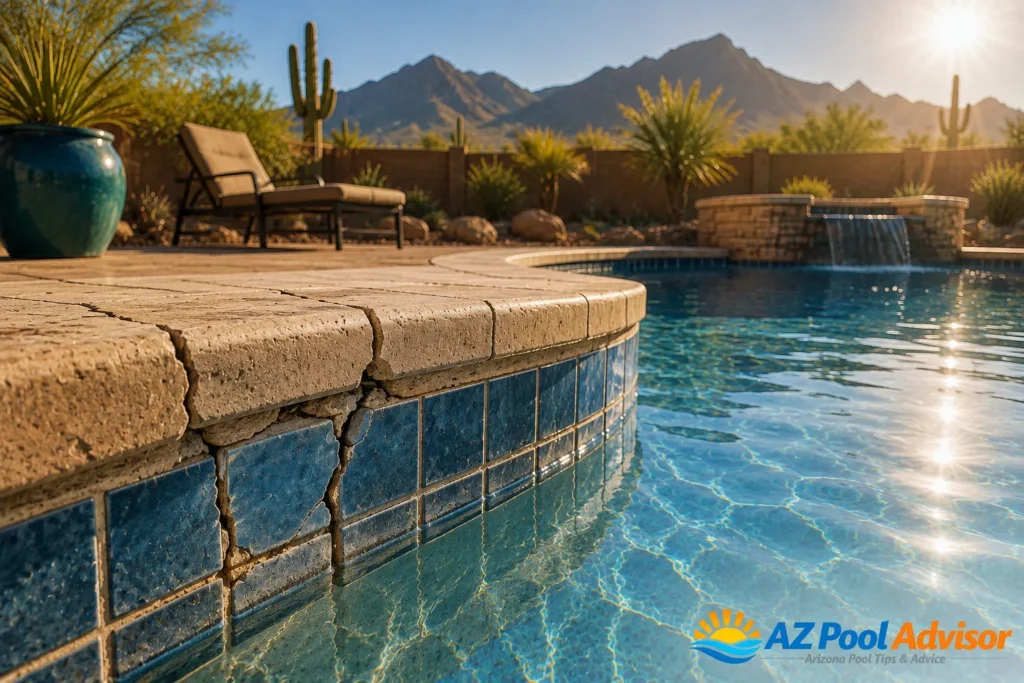
- Cracks around the pool deck
- Air bubbles in return lines
- Constant autofill usage
Leaks may occur in plumbing lines, pool equipment, skimmers, fittings, or the pool shell itself.
“A pool losing more than normal evaporation may need further inspection for leaks or equipment problems.”
How Wind and Heat Affect Evaporation
Arizona weather can dramatically increase evaporation rates. Strong sunlight heats the water while dry desert air quickly removes moisture from the pool surface.
Wind also plays a major role. Moving air accelerates evaporation by continuously removing moisture from the surface of the water.
This is one reason pools often lose more water during:
- Extreme summer heat
- Dust storms
- Windy afternoons
- Monsoon season
Homeowners are often surprised by how quickly water levels can drop during extended heat waves.
Checking Around Pool Equipment
Sometimes water loss may come from equipment leaks rather than the pool itself.
Homeowners should inspect areas around:
- Pool pumps
- Filters
- Heaters
- Valves
- Plumbing connections
Visible dripping, puddles, or wet equipment pads can sometimes point to small leaks that gradually waste water over time.
The Bucket Test
One common way homeowners compare evaporation versus leaks is by performing a simple bucket test.
This test involves:
- Filling a bucket with pool water
- Placing it near the pool
- Comparing water loss over time
If the pool loses significantly more water than the bucket, a leak may be present.
While this test is not always perfect, it can sometimes help identify abnormal water loss.
“The bucket test can help homeowners compare normal evaporation against possible leak-related water loss.”
How to Help Reduce Evaporation
Although some evaporation is unavoidable in Arizona, homeowners can still take steps to help reduce excessive water loss.
Helpful strategies may include:
- Using a pool cover
- Reducing unnecessary splash-out
- Adjusting fountain or water feature use
- Monitoring water levels regularly
- Maintaining proper equipment operation
Keeping the pool properly maintained can also help reduce stress on equipment caused by low water levels.
Why Low Water Levels Can Cause Problems
Allowing water levels to drop too low can create circulation and equipment issues.
Low water levels may cause:
- Skimmers to suck air
- Poor circulation
- Reduced filtration
- Pump damage
- Water chemistry imbalance
Checking pool water levels regularly becomes especially important during Arizona summers.
Final Thoughts
Arizona pools naturally lose more water due to heat, sunlight, wind, and dry desert conditions. In many situations, evaporation is completely normal.
However, rapid water loss, wet spots, or equipment leaks may point to a larger problem that should be inspected further.
Monitoring water levels regularly can help homeowners protect pool equipment, maintain proper circulation, and avoid unnecessary water waste during the hottest parts of the year.