Pool Automation Systems: A Smart Upgrade for Arizona Pools
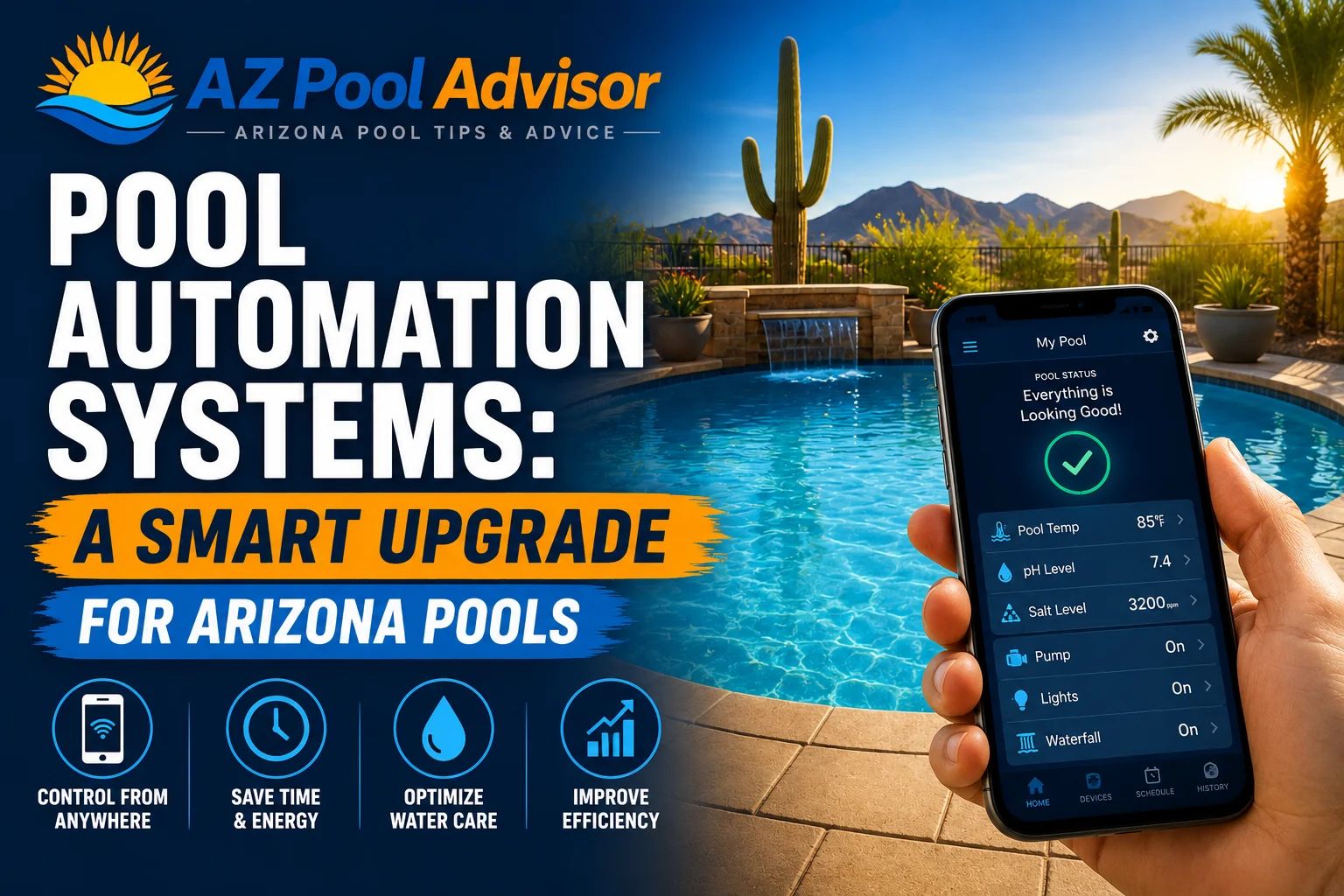
Arizona homeowners know pools are more than a backyard luxury — they’re a year-round investment that requires regular attention. Pool automation systems take much of that guesswork off your plate: they control pumps, heaters, lights, chemical feeders, and more from a touch-screen or smartphone. For Arizona pools, automation isn’t just convenience; it’s a practical tool for managing extreme heat, rapid evaporation, monsoon debris, and hard-water scale.
What a pool automation system actually does
At its core, a pool automation system coordinates and schedules pool equipment so the pool runs efficiently and safely. Common capabilities include:
- Scheduling pumps and variable-speed pump speeds.
- Controlling heaters and timers for heat pumps or gas heaters.
- Managing lights, water features, and automatic cleaners.
- Automated chemical control or integration with chemical feeders and salt chlorinators.
- Auto-fill and water-level control to combat evaporation.
- Remote monitoring and push notifications for failures, low water, or power outages.
- Basic diagnostics and flow/leak sensors to detect equipment problems sooner.
Why Arizona pool owners benefit more than most
Arizona presents a unique set of pool-care challenges. A smart automation system can help you address them proactively:
- Extreme heat speeds chlorine degradation and increases evaporation. Automation lets you schedule more filtration and targeted sanitizer dosing during hot months without manually flipping switches.
- Monsoon storms drop leaves, dust and debris fast. Automated cleaner runs and increased filter cycles during monsoon season reduce plumbing clogs and algae risk.
- Hard water around Phoenix, Mesa and Tucson causes scale on tiles and equipment. Automation can schedule periodic backwashes and run patterns that help limit scale buildup when combined with proper chemical control.
- Year-round use in many Arizona neighborhoods makes consistent equipment schedules and remote monitoring especially valuable for busy families and second-home owners.
Key features to prioritize for Arizona pools
Not all automation packages are equal. When shopping, Arizona homeowners should focus on features that handle local conditions:
Variable-speed pump compatibility
Linking your automation to a variable-speed pump is one of the most effective ways to reduce energy use while keeping water clean. Look for systems that can set different speeds for filtration, cleaner cycles and spa modes.
Auto-fill and leak/low-water protection
Evaporation is intense in summer. Auto-fill protects equipment from running dry and triggering pump damage; flow and low-water alerts help you respond quickly to leaks or unusually fast water loss.
Robust connectivity with local fallback
Wi‑Fi-based systems are convenient, but heavy storms or weak home Wi‑Fi can interrupt cloud services. Choose systems that support local control at the equipment pad or offer cellular fallbacks if remote reliability is a priority.
Surge protection and weatherproofing
Arizona’s electrical storms can damage equipment. Ask about integrated surge protection, metal-enclosed controllers for outdoor equipment pads, and UL/ETL listings for safety and code compliance.
Chemical and salt system integration
If you use a salt chlorinator or automated chemical feeders, confirm compatibility. Good automation integrates chemical setpoints and will run equipment cycles tied to sanitizer dosing to maximize effectiveness in heat.
Installation and electrical considerations
Automation is more than bolting a box to the equipment pad. Expect licensed pool electricians and certified technicians to be part of the job. Essential points:
- Proper bonding and grounding are required by code and protect you and your equipment.
- Controllers must be installed to avoid direct splash zones and high heat; shading the equipment pad helps electronics last longer.
- Upgrading wiring, breakers or adding a subpanel is common during retrofits—get a written estimate covering all electrical work.
Practical automation schedules for Arizona conditions
Instead of a one-size-fits-all runtime, adapt schedules by season and weather. Examples you can discuss with your pool professional:
- Summer (peak heat): Increase turnover and sanitizer feed during midday and evening swim hours; consider multiple short cycles rather than one long run to improve filtration and reduce suspended particles.
- Monsoon season: Increase skimmer/cleaner cycles and backwash frequency around forecasted storm windows to handle debris and keep filters efficient.
- Cooler months: Reduce filtration runtime but keep circulation frequent enough to prevent stagnation and scale formation.
Energy and maintenance savings — what to realistically expect
Automation helps you get the most from energy-saving equipment like variable-speed pumps and allows smart scheduling around time-of-use electric rates. Savings depend on your pool size, existing equipment, and local electric rates. For many Arizona homeowners, pairing automation with a variable-speed pump is the single most effective energy upgrade.
Security, firmware updates and long-term support
Keep the system’s firmware current and use strong account passwords. Verify vendor support and how firmware updates are handled before you buy — reliable remote diagnostics and timely software patches avoid headaches later.
Choosing the right system and installer
Get multiple local quotes that include equipment, electrical work, and any needed plumbing changes. Ask installers about experience with Arizona pools, monsoon-proofing, and hard-water mitigation. Request references or examples of recent installs in your city.
FAQ
Can automation work with a salt chlorinator?
Yes — many automation systems integrate with salt chlorinators. When integrated, automation can schedule pump cycles that optimize sanitizer production and limit chlorine loss in high heat.
Will automation reduce my chemical use?
Automation helps stabilize water chemistry by running filtration and dosing on a schedule, which can reduce chemical waste. Real reductions depend on proper calibration and ongoing testing.
How does automation handle monsoon debris?
Good systems allow you to schedule additional cleaner and filter cycles around storm forecasts and to receive alerts when debris loads or pressure differentials indicate a backwash is needed.
What happens during a power outage?
Most controllers return to their last state after power is restored. Some systems offer battery backups or cellular alerts to let you know equipment stopped. Ask your installer about outage behaviors and optional backups.
Do I need to replace my pump to use automation?
Not always. Basic automation can control standard single-speed pumps, but to unlock energy savings and advanced scheduling, pairing with a variable-speed pump is recommended.
How often should the system be serviced?
Plan for annual checkups and after major weather events. Technicians can verify wiring, sensors, and firmware so your automation continues protecting your pool.
Automation can be a game-changer for Arizona pool owners when selected and installed with local climate challenges in mind. If you’re ready to explore options, AZ Pool Advisor has guidance and a directory of trusted local pool companies to get quotes and professional installs.