Cartridge Filters vs Sand Filters: Which Is Best for Arizona Pools?
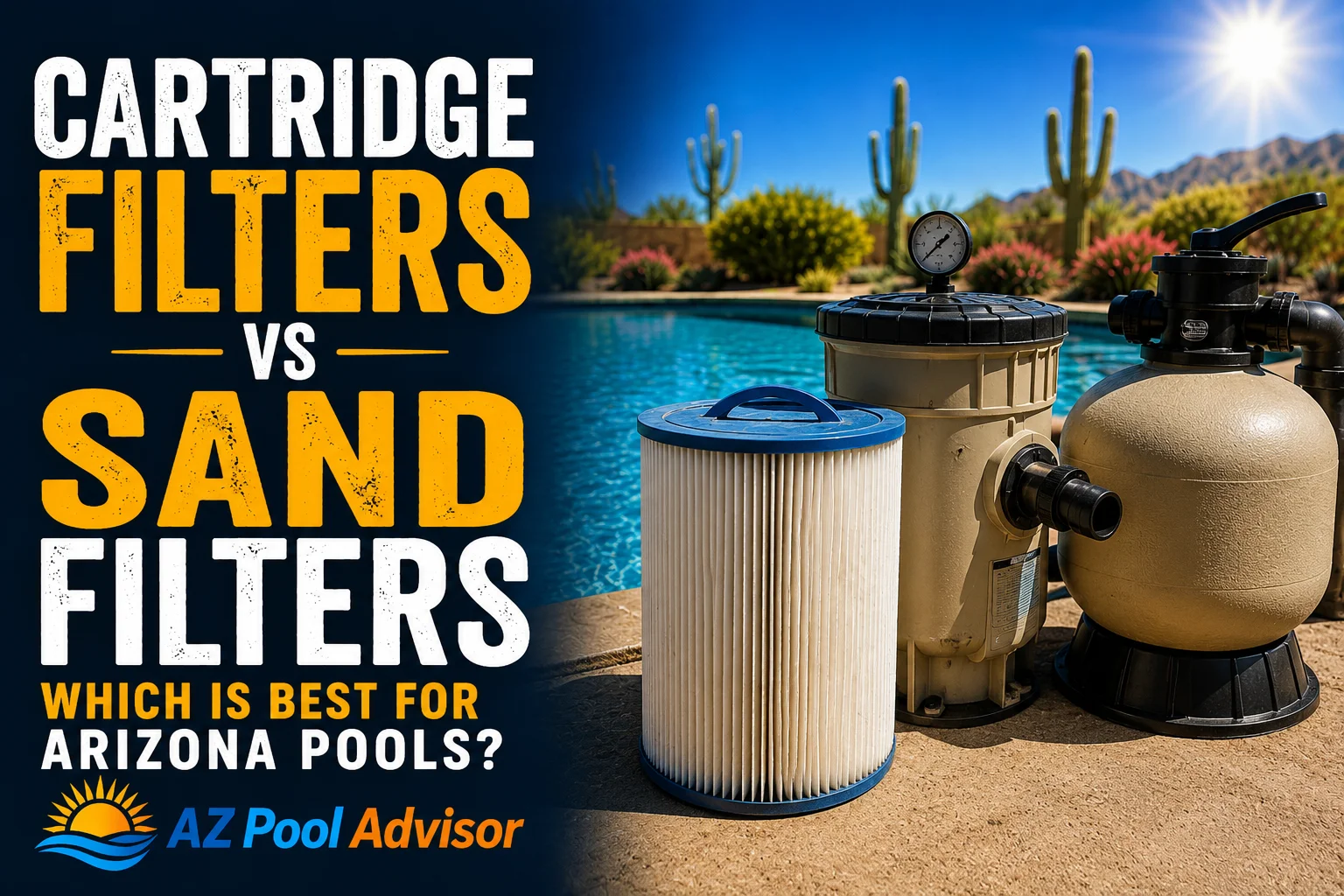
Choosing the right pool filter matters more in Arizona than in many other places. With blistering summer heat, frequent monsoon debris, hard water and year‑round pool use, your filter must keep water clear while staying easy and economical to maintain. This guide explains how cartridge filters and sand filters work, the pros and cons of each in an Arizona setting, and practical tips so you can choose the best option for your yard, budget, and schedule.
How cartridge and sand filters work — quick primer
Cartridge filters
Cartridge filters use a pleated fabric (usually polyester) wrapped around a core. Water passes through the pleats; debris is trapped on the outside surface. When the cartridge is dirty you remove it and clean or replace it. Cartridge filters do not need backwashing, and they typically offer finer filtration than sand.
Sand filters
Sand filters push pool water through a bed of special filter-grade sand (or in some units a manufactured media). The sand traps debris as water flows through. To clean a sand filter you backwash — reversing flow to flush the captured debris out the waste line. Periodically the sand bed itself needs replacement or redistribution.
Performance and water clarity
Cartridge filters generally capture smaller particles than standard sand filters, so they often produce slightly clearer water with less reliance on chemical flocculants or clarifiers. That can be helpful in Arizona when dust and fine monsoon silt enter the pool.
Sand filters are effective for larger debris (leaves, bugs, heavy dirt) and, when sized correctly, can keep a pool clear for families who want low-maintenance operation. Newer high‑rate sand media or glass media can close the performance gap, but that may raise cost.
Arizona considerations: heat, monsoons, hard water, and year‑round use
Arizona has a few features that influence filter choice:
- Extreme heat: High temperatures increase bather load (more sweat/sunscreen/oils) and boost chemical evaporation. Filters will see heavier organic load in summer, so expect more frequent cleaning no matter the type.
- Monsoon debris: Summer storms bring fine dust and organic material. Cartridge filters trap fine dust well, but frequent cleaning after storms is required to prevent channeling and reduced flow.
- Hard water and calcium: Arizona water is often high in calcium and total dissolved solids. Hard water increases scale build‑up on cartridges and inside sand filters. Regular descaling/acid rinses and maintaining proper water chemistry help extend filter life.
- Year‑round use: Many Arizona homeowners use pools most months. Continuous or extended seasonal operation favors systems that are easy to maintain and whose consumable costs fit your budget.
Maintenance and operating costs
Maintenance needs and cost over time are what usually decide the winner for homeowners.
Cartridge filters — maintenance realities
Cartridge filters avoid backwashing, so they save water — an important consideration in Arizona where evaporation already makes refill and water bills high. Typical maintenance is rinsing cartridges every few weeks during heavy use and doing a deeper soak/clean every 1–3 months depending on load. Cartridges should be inspected regularly for tears, compressed pleats, or scaling and replaced when worn.
Sand filters — maintenance realities
Sand filters require backwashing, which wastes water but is quick to do. After a monsoon or heavy debris event you may need to backwash more often. Every few years the sand should be replaced (or reconditioned) to restore filtering efficiency. Sand filters typically require less frequent parts replacement than cartridges, but ongoing water waste and potential need to upgrade media are factors.
Cost and lifespan
Upfront cost: sand filters are commonly the lower initial cost option for the same flow rate. Cartridge systems often cost more at purchase, though they can be more compact and have fewer plumbing requirements.
Ongoing cost: cartridges are a recurring expense — replacement cartridges are needed periodically (frequency depends on use and water quality). Sand lasts longer between full replacements but you’ll pay for regular backwashing (water cost) and occasional media replacement.
Longevity: both filter types can last many years if maintained properly. Cartridge housings and sand filter tanks are durable; consumables (cartridges, sand/media) have different replacement cycles.
Which filter makes sense for typical Arizona homeowners?
There’s no single right answer — here are practical recommendations based on common Arizona scenarios:
- Homes near large trees or in heavy monsoon areas: Cartridge filters give better fine-particle capture and easier cleanup of silt, but plan on frequent cleanings after storms.
- Low-maintenance families who prefer weekly checkups: Sand filters (or sand with upgraded media) can be simpler day‑to‑day — backwash weekly or as needed — but expect higher water use.
- Water‑conscious homeowners: Cartridge systems save water because they don’t require backwashing; that’s a meaningful benefit in Arizona.
- Pools with salt systems or high bather load: Cartridges’ finer filtration helps reduce organics load, but aggressive chlorine (salt) can shorten cartridge life unless rinsed and treated carefully.
Practical tips for Arizona pool owners
- Inspect filters after every monsoon storm. Remove and rinse cartridges or backwash sand filters promptly to avoid trapped organic material breaking down in the system.
- Control scale by keeping total alkalinity and calcium hardness in range; use a scale inhibitor if you have very hard water.
- Consider a pre‑filter basket on your pump for heavy leaf areas — it reduces wear on both cartridge pleats and the sand bed.
- Size your filter correctly. A too-small filter will struggle in Arizona conditions and increase maintenance frequency regardless of type.
- When replacing sand, ask your pool pro about alternative media (glass, zeolite) that can improve filtration without the frequent water loss of cartridge systems.
Making the final decision
If you value water conservation and finer filtration for dust and silt, a cartridge filter is often the better match for many Arizona pools. If you want the lowest hands‑on routine and don’t mind scheduled backwashing and slightly coarser filtration, a sand filter keeps things simple and economical up front. Many homeowners choose hybrid approaches — for example, a large skimmer and pump basket, followed by a sand filter with upgraded media — to balance clarity and maintenance.
Where to get help
AZ Pool Advisor has local resources and vetted pool companies across Arizona to help with sizing, media selection, installation, and maintenance plans. If you’re unsure which direction to take, contact a trusted local pool professional for an on‑site assessment — they’ll consider pool size, pump flow rate, landscaping, and local water chemistry.
FAQ
Q: Which filter uses less water, cartridge or sand?
A: Cartridge filters typically use less water because they do not require backwashing. Sand filters require periodic backwashing, which discharges water to waste.
Q: How often should I clean a cartridge in Arizona?
A: In heavy use or after monsoons, cartridges may need a rinse every 2–4 weeks and a deep clean every 1–3 months. Adjust frequency based on visible pressure rise and water clarity.
Q: How often do you need to replace sand?
A: Sand media is usually replaced every 3–7 years depending on pool use and the type of media. Alternative media may last longer but can cost more up front.
Q: Can I convert a sand filter to a cartridge or vice versa?
A: Yes—many plumbing layouts allow conversion, but conversion usually requires a new tank, appropriate plumbing, and correct pump sizing. Have a local pool pro evaluate your setup.
Q: Which is better for hard water and scale?
A: Neither filter prevents scale formation; managing water chemistry (alkalinity, hardness) and using scale inhibitors are the keys. Cartridges may need more frequent descaling in very hard water areas.
Arizona pool ownership has unique demands. Pick the filter that matches your priorities (water savings, clarity, hands‑on time) and build a maintenance routine around local conditions. For practical, local help with installation, replacements, or routine service, explore AZ Pool Advisor for guidance and trusted Arizona pool companies.