Salt Water vs Chlorine Pool: Which Is Better for Arizona Homes?
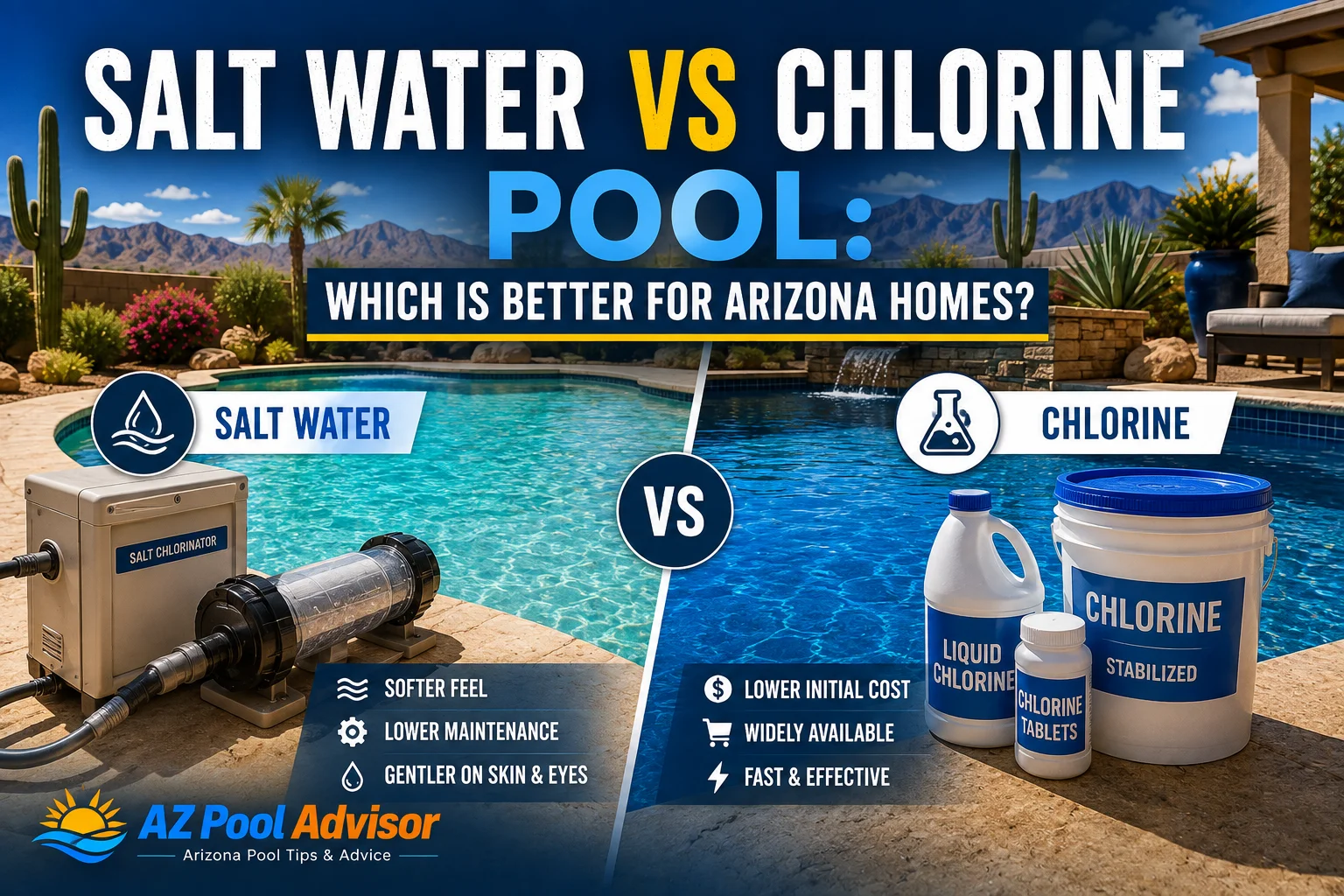
Choosing between a salt water system and a traditional chlorine approach is one of the most common decisions Arizona pool owners face. Both systems use chlorine to sanitize water, but they do it differently — and the desert climate changes the maintenance, cost, and comfort equation.
This guide explains how each system works, the trade-offs for Arizona conditions (extreme heat, hard water, fast evaporation, and monsoon debris), and practical advice to help you pick the right setup for your home.
How salt water and chlorine systems actually work
Traditional chlorine
Most pools use chlorine added directly as liquid (sodium hypochlorite), granular shock (calcium hypochlorite), or stabilized chlorine tablets. These chemicals introduce free chlorine into the water to kill bacteria and control algae. Pool owners dose manually or use chemical feeders and automation to maintain a target free chlorine level.
Salt water systems
Salt water pools use a salt chlorine generator (salt cell) that converts dissolved salt into chlorine through electrolysis. The system continuously produces a low level of chlorine from the salt you keep in the pool. You still manage pH, total alkalinity, and stabilizer; the difference is the onsite production of chlorine rather than adding ready-made chlorine products.
Water balance and routine maintenance
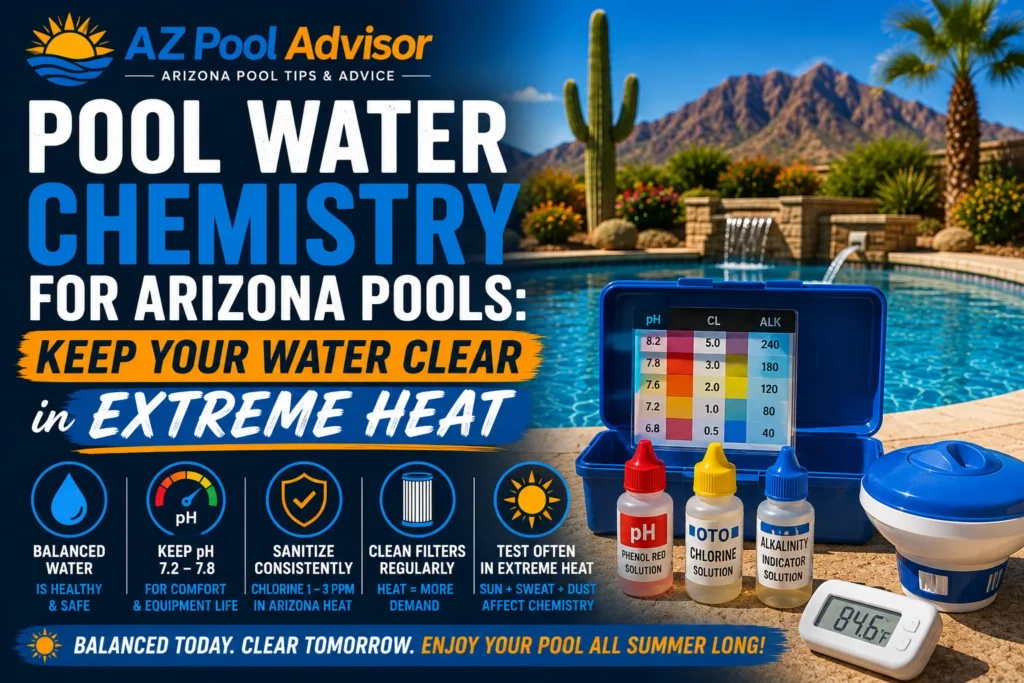
Either system needs regular testing and balancing. Key parameters for Arizona pools include pH, total alkalinity, calcium hardness, and free chlorine. Salt systems add a couple of specific checks: salt level and periodic cell cleaning or replacement.
Because Arizona pools run year-round, plan on at least weekly checks during the hot season and less-frequent checks in cooler months if the pool is covered and lightly used. Automation and good test kits reduce guesswork and protect finishes from scaling or etching.
Costs: upfront versus ongoing
Upfront costs for a salt system are higher because you’ll buy and install a salt chlorine generator. Ongoing costs shift: you buy less chlorine product, but you do pay for electricity to run the cell, replacement cells every several years, and occasional cell cleaning. Traditional chlorine has lower startup cost but steady ongoing chemical purchases.
When weighing cost, consider local Arizona factors that change consumption: higher chlorine burn-off in summer, extra shock treatments after monsoon storms, and more frequent top-offs due to evaporation (which concentrates salts and minerals).
Arizona-specific considerations
Extreme heat and chlorine burn-off
Arizona heat accelerates chlorine degradation. Pools lose free chlorine faster in high temperatures and strong sunlight, whether produced by a salt cell or added as chemicals. Expect more frequent monitoring and higher sanitizer demand from May through September.
Evaporation and salt concentration
High evaporation rates concentrate everything left behind — salts, calcium, and minerals. For salt pools this means occasional dilution with fresh water to keep salt within the generator’s recommended range. For hard-water areas, evaporation can push calcium hardness high enough to cause scale on tiles and heaters.
Monsoon debris and algae risk
Monsoon season brings dust, leaves, and organic debris that increase chlorine demand. Both systems will need extra shock and brushing after heavy storms; salt pools create chlorine continuously so they can rebound well, but neither system is immune if filtration and circulation are inadequate.
Hard water and scaling
Many Arizona homes have hard water. Salt systems do not eliminate scale risk — they can even exacerbate scaling on heaters, tiles, and plumbing if calcium hardness and pH aren’t managed. Regular testing and acid washes or scale-control treatment are common maintenance tasks.
Pros and cons at a glance
Salt water pool — advantages
- Softer-feeling water and less “chlorine smell” for many swimmers.
- Steady chlorine production reduces the need to handle concentrated chemicals daily.
- Good for year-round pools because the cell keeps producing sanitizer when the system runs.
Salt water pool — disadvantages
- Higher upfront cost for the generator and professional installation.
- Salt cells require replacement every few years and periodic cleaning; electrical components can fail.
- Salt and hard water can accelerate corrosion on some fixtures and increase scale risk if not managed.
Traditional chlorine — advantages
- Lower initial cost and simple components that many local techs know well.
- Easy to raise chlorine quickly (shock treatments) after storms or heavy use.
- Less concern about salt corrosion for metallic features or nearby landscaping.
Traditional chlorine — disadvantages
- Ongoing purchase and storage of chlorine products, which can be less convenient.
- Stronger perceived odors and more potential for skin/eye irritation if levels fluctuate.
- Chlorine demand spikes in Arizona heat mean frequent monitoring and dosing.
Installation and service considerations
If you choose a salt system, buy a reputable generator sized to your pool and ask a local service company to install it. Ask about warranty details, recommended run schedules, and how the company handles cell cleaning and replacement. For both systems, a properly sized pump and filter, plus good automation or timers, make maintenance easier and reduce chemical use.
Local service firms understand Arizona issues — recommending dilution schedules after extended drought or high-evaporation periods, adjusting run times for summer, and advising on scale control when you have hard water. Use AZ Pool Advisor to find and compare trusted companies in your area.
Which is right for your Arizona pool?
Salt systems suit homeowners who want less daily chemical handling and a softer swimming experience, and who are willing to invest in the generator and its maintenance. Traditional chlorine is often better for owners who want lower startup costs, simpler repairs, or who already have a well-practiced maintenance routine.
Consider a local contractor’s inspection before deciding. They can check your pool finish, heater, salt tolerance of fixtures, and water hardness to advise which system will cost less and require less hassle over the long run.
FAQ
Will a salt water pool eliminate the need for chlorine?
No. A salt system produces chlorine onsite. You still maintain a free chlorine level and test regularly. Salt pools are not chlorine-free — they are chlorine-generating systems.
Does salt ruin pool equipment or landscaping?
Salt can be corrosive to certain metals and may affect nearby concrete or plants if salt water is splashed and left to dry. Properly installed systems and routine dilution after top-offs reduce risks. Ask local pros about materials and finishes that stand up to Arizona conditions.
How often do salt cells need replacement?
Replacement depends on model, usage, and maintenance. Cells can last several years but do eventually need replacement. Regular cleaning and staying within recommended salt levels extend cell life.
Which system handles monsoon storms better?
Both systems need extra attention after heavy storms. Salt systems continuously produce sanitizer, which helps recovery, but strong organic loads may still require shock treatments and more filtration time.
Final thoughts and next steps
There’s no one-size-fits-all answer. For many Arizona homeowners, the decision comes down to budget, willingness to manage equipment, and sensitivity to handling chemicals. If you’re leaning toward a salt system, plan for a higher initial investment and a service partner who understands desert-water chemistry. If you prefer traditional chlorine, budget for the ongoing chemical spend and frequent testing during our long, hot months.