Safest Pool Toys for Kids: An Arizona Pool Owner’s Guide
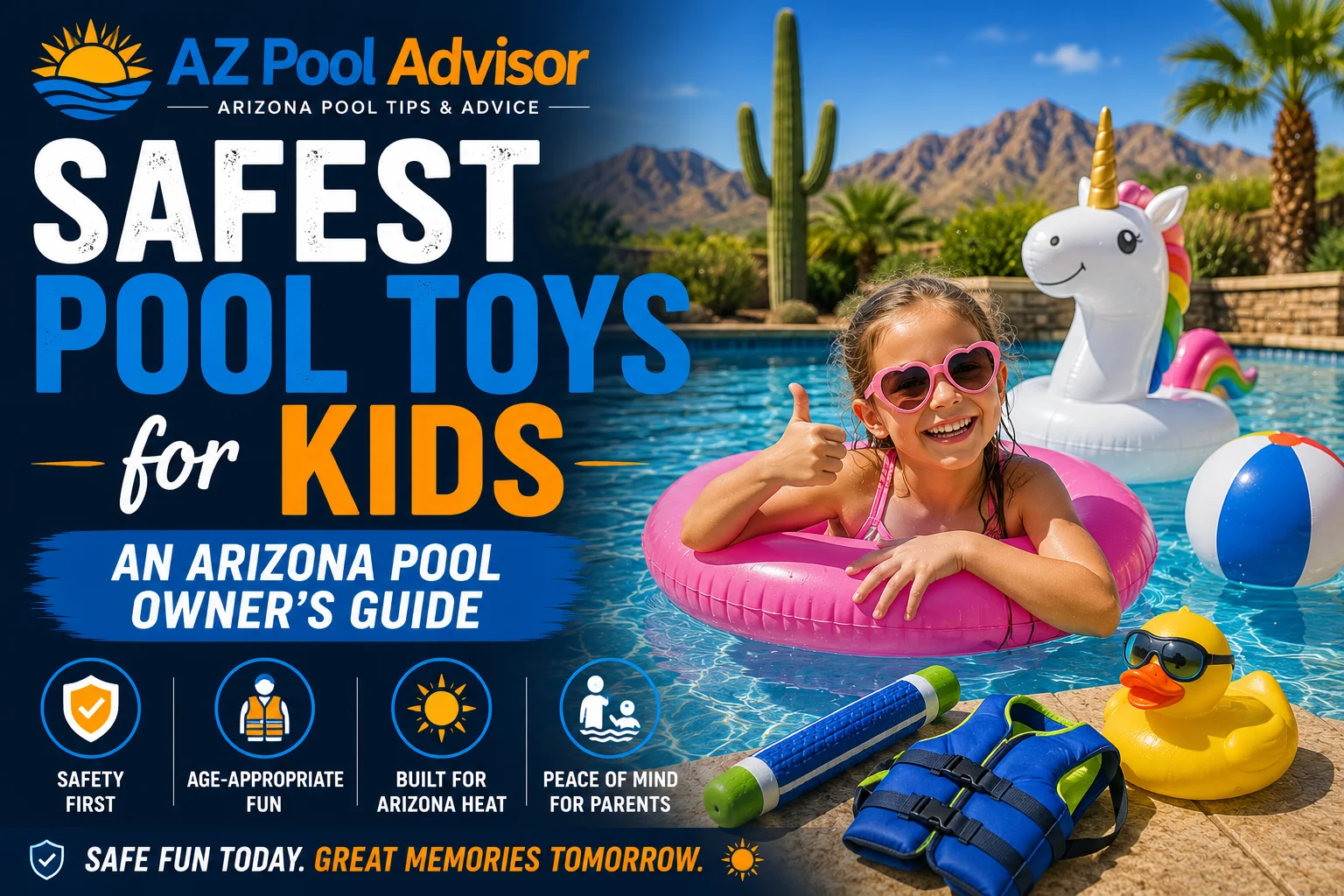
Arizona families love backyard pools, and the right toys can make pool time fun without increasing risk. But “fun” and “safe” aren’t the same thing: some toys encourage risky behavior, others fail in extreme heat, and many pick up hard-water scale or mildew in our desert climate. This guide walks Arizona pool owners through the safest types of pool toys for kids, what to avoid, and how to maintain toys so they last season after season.
What “safe” means for pool toys
Safe pool toys reduce entrapment, choking, and false security. They don’t encourage children to go near drains or deep water, are durable in UV and chlorine, and are appropriate for the child’s age and ability. Importantly, safety also depends on storage and supervision: a bright, buoyant toy left in the pool can tempt an unsupervised child into the water.
Top safest types of pool toys for Arizona kids
1. USCG-approved life jackets and personal flotation devices (PFDs)
For non‑swimmers and young children, a U.S. Coast Guard–approved life jacket is the single best flotation toy you can buy. These are wearable, secure, and designed to keep a child’s head above water. Choose the correct size and weight rating, check the approval label, and follow the manufacturer’s fit instructions. Do not rely on inflatable arm floaties or pool rings as primary flotation for unsupervised or weak swimmers.
2. Foam toys and pool noodles
Closed-cell foam toys (noodle, kickboards, foam rings) are durable, don’t puncture in the heat, and won’t overinflate or burst on a hot Arizona day. They offer buoyancy for practice and play without giving the false security of an inflatable. Foam toys are also easy to rinse and dry, making them good choices for pools with hard water or high chlorine.
3. Large, lightweight dive toys with bright colors
Choose dive sticks and rings that are large enough to avoid choking hazards and brightly colored so they’re visible in murky or sun-glare conditions. Weighted dive toys should be small enough for kids to retrieve safely; avoid heavy metal weights that can cause injury. In Arizona’s clear water, high-visibility colors help you spot toys quickly and reduce time children spend underwater searching.
4. Floating playsets designed with safety features
Look for floating basketball hoops or target games with broad bases that won’t tip easily. Prioritize products with smooth edges, no long cords or strings, and large pieces that won’t become debris in monsoon winds. Avoid motorized toys that encourage kids to reach near skimmers or pool drains.
5. Goggles, masks, and swim belts (as training aids)
Goggles and soft swim belts are useful training tools that help build comfort and skill in the water. Swim belts are not life-saving devices—use them under close adult supervision and alongside approved PFDs for weak swimmers.
What to avoid (and why)
Avoid small toys that are choking hazards, toys with detachable small parts, and novelty inflatables that double as flotation devices—these can create a false sense of security. Toys that attract kids to deep ends or pool drains (for example, toys that get stuck near the skimmer) increase risk. Inflatables left in direct sun can overpressurize and burst, so keep them deflated and stored when not in use.
How to choose and maintain toys for Arizona pools
Picking the right toy is only half the job. Arizona conditions—extreme summer heat, intense UV, hard water mineral deposits, and monsoon debris—affect toys fast. Follow these practical steps:
- Read labels: check age recommendations and safety approvals (e.g., USCG for life jackets).
- Prefer UV-stabilized materials and closed-cell foam for desert durability.
- Rinse and dry after use: chlorine and minerals shorten toy life and harbor mildew. Wipe or hang toys to dry in the shade rather than direct sun.
- Store toys out of the elements: keep them in a shaded bin or garage during summer and remove them before monsoon storms to prevent them from blowing away or becoming clogged with debris.
- Inspect regularly for tears, brittle plastic, or exposed foam. Replace toys with structural damage.
Cleaning and hard-water care
Arizona’s hard water leaves mineral scale on toys and fittings. For scale, a soak in white vinegar can help loosen deposits; rinse thoroughly afterward. To remove mildew or sanitize, follow manufacturer instructions—many toys tolerate a household bleach solution used per label directions. Avoid harsh scrubbing that can remove UV protectants or paint. For fabric or mesh parts, remove and dry completely to prevent mold.
Supervision, storage, and emergency prep
Toys can be part of a safety plan or part of the problem. Keep these household rules:
- Remove toys from the pool when not in use—out of sight is out of temptation for young children.
- Keep age-appropriate toys accessible at supervised swim times only; store toddler toys separately from older kids’ toys.
- Arrange shaded storage near the pool so you can quickly put toys away during monsoon winds or at the end of swim time.
- Train adults in CPR and keep rescue equipment (ring buoy, reaching pole) nearby. Toys are not substitutes for rescue gear.
When to replace a pool toy
Replace toys when they show cracking, crumbling foam, stretched or brittle straps, torn seams, or when labels are unreadable. If a toy relied upon for flotation (like a PFD) fails inspections, replace it immediately. Regular replacement is a small cost compared with the safety benefits—especially in year‑round use climates like Arizona where sun and chemicals accelerate wear.
Practical Arizona considerations
Arizona summers can exceed the temperature ratings of some inflatables—heat can overinflate and burst them. Store inflatables in the shade and check pressure when moving from cool storage to hot decks. Monsoon season brings wind-blown debris that can damage lightweight toys and clog pumps—secure or stow toys before storms. Finally, high chlorine and mineral content can degrade colors and materials; a regular maintenance rinse and seasonal replacement plan keeps toys safe and sanitary.
Final safety checklist
Before each swim, check these quick items: verify the right-sized, USCG-approved PFD for non-swimmers; remove tempting toys from the water when children aren’t actively supervised; inspect toys for damage; and clear the deck and water of monsoon debris. Supervision and proper equipment selection are the most effective safety measures.
FAQ
Are inflatable arm floats safe for young children?
Inflatable arm floats are not reliable life-saving devices. They can leak, shift, or give a false sense of security. For non-swimmers or young children, use a properly sized USCG-approved life jacket and supervise closely.
Which toys are best for toddlers?
For toddlers, choose large, soft foam toys and wearable PFDs that fit properly. Avoid small pieces, detachable parts, and heavy or weighted toys. Keep play shallow and within arm’s reach of an adult.
How should I clean pool toys affected by hard water?
Rinse toys after each use and dry them in the shade. For mineral scale, a vinegar soak can help; follow with a thorough rinse. For mildew or sanitizing, follow manufacturer instructions and use household disinfectants according to label guidance.
Do floating games increase drowning risk?
Any toy that encourages children to swim to the deep end or near drains can raise risk. Choose games that stay in shallow water or have easy retrieval, and always remove toys from the pool when not actively supervised.
How often should I replace pool toys in Arizona?
Replace toys at the first sign of structural damage, brittle plastic, or worn straps. In Arizona’s intense sun and chemistry, expect shorter lifespans—plan to rotate or replace toys yearly if used frequently.
Keeping kids safe around the pool combines smart toy choices, regular maintenance, and adult supervision.