Now Reading: Pool Repair Guide for Arizona Homeowners
-
01
Pool Repair Guide for Arizona Homeowners
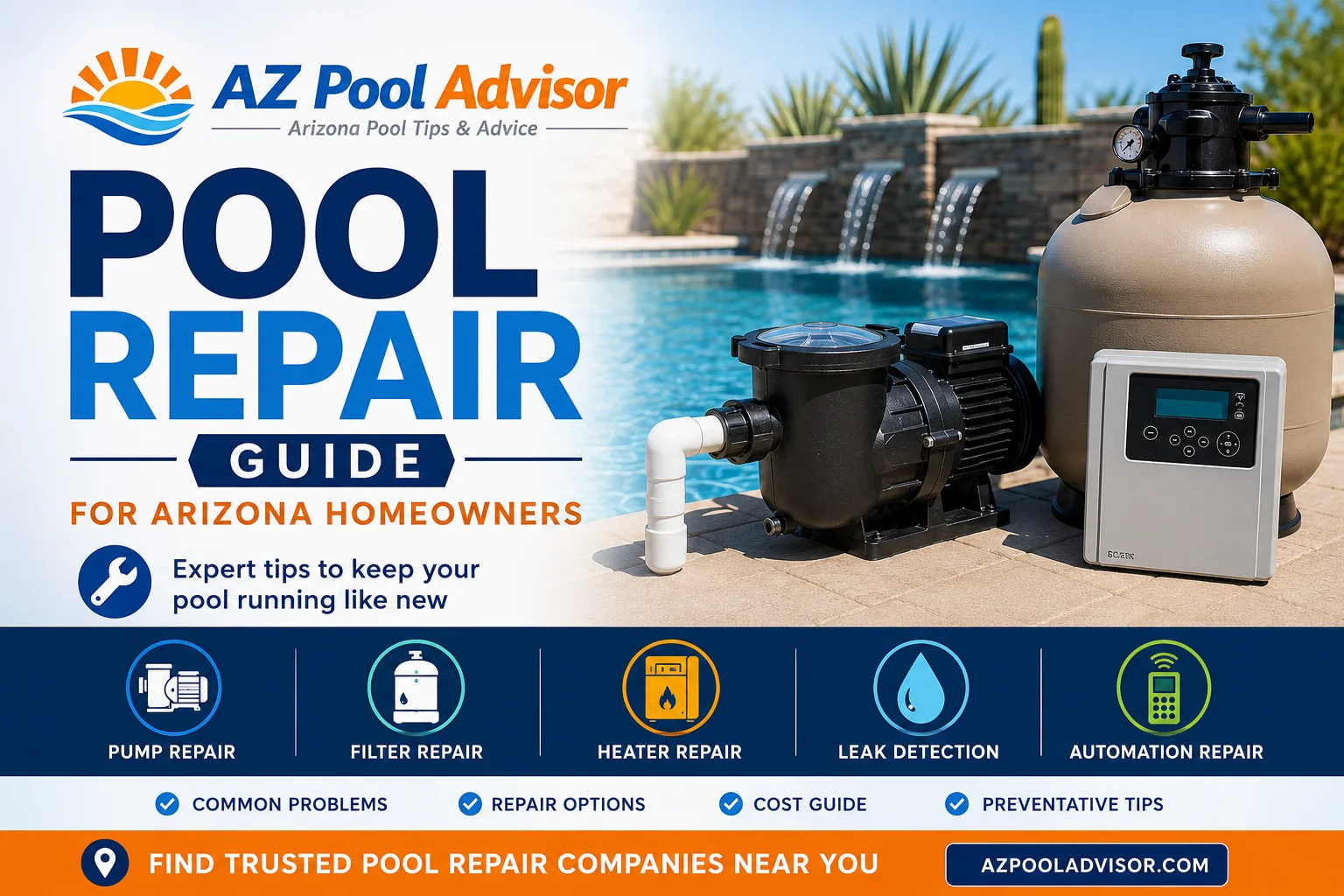
A swimming pool is one of the biggest investments many Arizona homeowners make. With year-round use, intense summer heat, and hard water, pool equipment naturally wears down over time. Fortunately, many pool problems can be identified early, helping you avoid expensive repairs and unexpected breakdowns.
This guide explains the most common pool repairs, how to recognize early warning signs, when repairs may be needed, and when it makes more sense to replace aging equipment. Whether you’re troubleshooting a noisy pump or wondering why your heater isn’t working, this guide will help you better understand your pool system.
Table of Contents
- Pump Repair
- Filter Repair
- Heater Repair
- Leak Detection
- Automation Repair
- Repair or Replace?
- Average Repair Costs
- Frequently Asked Questions
Pump Repair
The pool pump is often called the heart of your swimming pool. It circulates water through the filtration system, helping remove debris and distribute chemicals evenly throughout the pool.
Common Pump Problems
- Pump won’t start
- Loud grinding or screeching noises
- Water leaking around the pump
- Pump losing prime
- Weak water circulation
- Overheating motor
- Air bubbles returning through the pool returns
Common causes include worn motor bearings, failed shaft seals, clogged impellers, electrical problems, failed capacitors, or suction-side air leaks.
Filter Repair
Your pool filter removes dirt, debris, and contaminants from the water. When it isn’t working properly, water quality can decline quickly.
Common Filter Problems
- High filter pressure
- Low filter pressure
- Dirty or clogged cartridges
- Broken filter grids
- Sand returning to the pool
- DE powder returning to the pool
- Cracked filter housing
Routine cleaning and maintenance often prevent larger filter repairs and extend equipment life.
Heater Repair
Pool heaters allow homeowners to enjoy their pools during cooler months. Like any appliance, they occasionally require maintenance or repairs.
Common Heater Problems
- Heater won’t ignite
- Water isn’t heating properly
- Heater shuts off unexpectedly
- Error codes displayed
- Flow switch failures
- Burner problems
- Internal corrosion
Arizona’s hard water can contribute to mineral buildup that affects heater performance over time.
Leak Detection
Water naturally evaporates, especially during Arizona summers. However, excessive water loss may indicate a plumbing or structural leak.
Signs Your Pool May Have a Leak
- Constant need to add water
- Water level dropping faster than expected
- Wet spots around the pool
- Soft or sinking soil
- Air entering the pump system
- Higher-than-normal water bills
Bucket Test
A simple bucket test can help determine whether water loss is caused by evaporation or a leak. If the pool loses noticeably more water than the bucket over 24 to 48 hours, further leak detection may be recommended.
Automation Repair
Pool automation systems control pumps, heaters, lighting, water features, and scheduling. Modern systems improve convenience but occasionally require repairs.
Common Automation Problems
- Controller won’t power on
- Wi-Fi connection issues
- Timers not working
- Valve actuators malfunctioning
- Lighting controls not responding
- Communication errors between equipment
Many automation issues are caused by software updates, electrical faults, or aging components.
Repair or Replace?
Repairing equipment is often the most affordable option, but replacement may provide better long-term value.
Replacement may be worth considering when:
- Equipment is over 10 to 15 years old.
- Repair costs exceed roughly half the replacement cost.
- Multiple components are beginning to fail.
- New equipment offers significant energy savings.
- Replacement parts are becoming difficult to find.
A qualified pool repair professional can help determine which option makes the most financial sense.
Average Pool Repair Costs
Pool repair costs vary depending on the type of equipment, labor required, and replacement parts.
Factors that influence pricing include:
- Equipment type
- Age of the equipment
- Manufacturer
- Availability of parts
- Electrical repairs
- Plumbing repairs
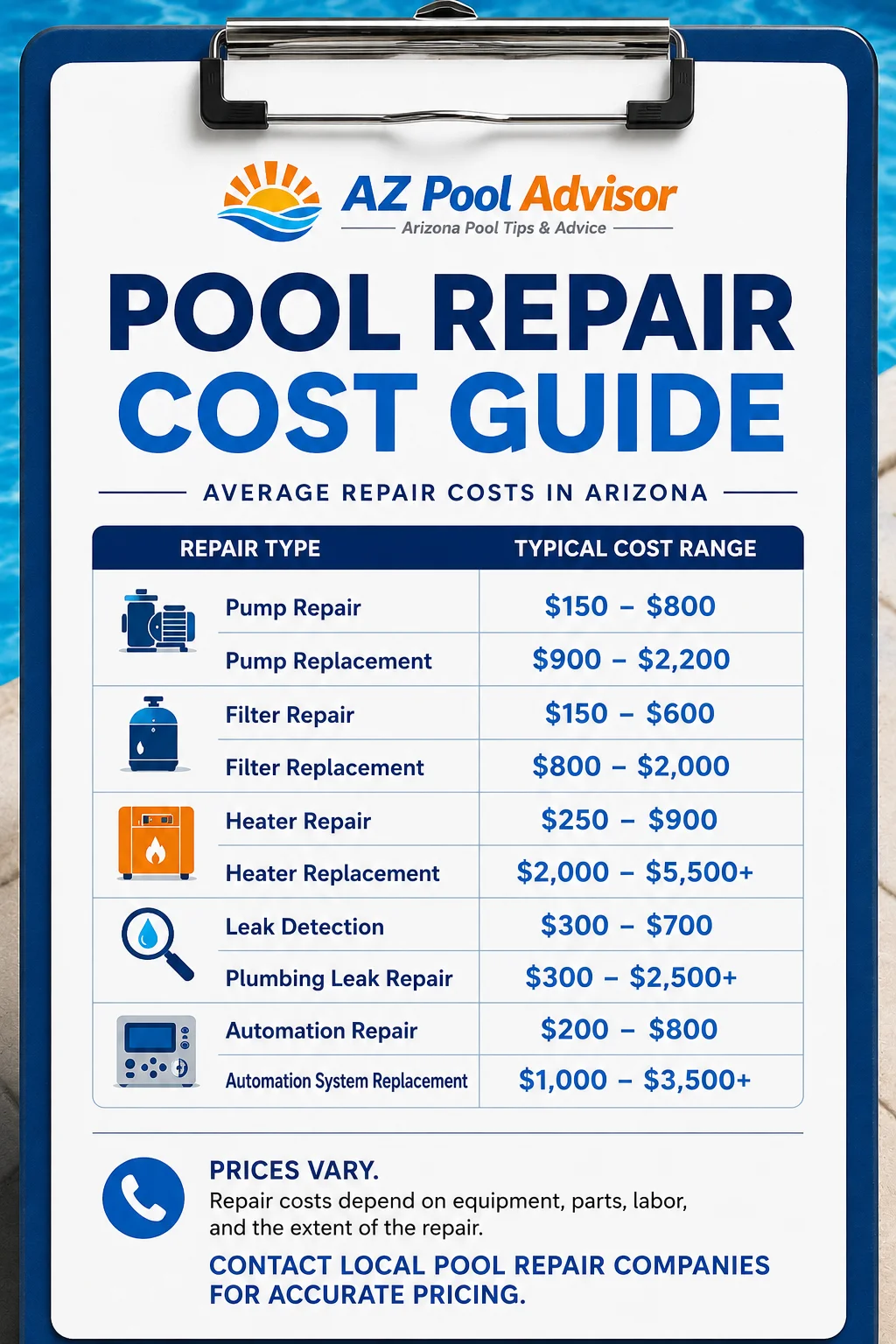
Obtaining multiple estimates can help homeowners compare repair recommendations and pricing.
Preventative Maintenance
Routine maintenance helps reduce unexpected equipment failures and expensive repairs.
- Empty skimmer baskets weekly.
- Clean pump baskets regularly.
- Maintain proper water chemistry.
- Clean or backwash filters as needed.
- Inspect equipment for leaks.
- Listen for unusual equipment noises.
- Schedule annual equipment inspections.
Addressing small problems early often prevents much larger repairs later.
Frequently Asked Questions
How do I know if my pool pump is failing?
Common signs include loud noises, leaking water, poor circulation, overheating, or a pump that will not start.
How often should pool equipment be inspected?
Perform a visual inspection each week and consider a professional inspection at least once each year.
Is it cheaper to repair or replace pool equipment?
That depends on the equipment’s age, repair cost, and overall condition. Older equipment may be more cost-effective to replace.
Can Arizona hard water damage pool equipment?
Yes. High calcium levels can lead to scale buildup inside heaters, filters, plumbing, and other equipment if not properly managed.
Should I repair pool equipment myself?
Basic maintenance tasks are appropriate for many homeowners, but electrical work, plumbing repairs, gas heater repairs, and major equipment repairs should generally be handled by a qualified pool repair professional.
Find an Arizona Pool Repair Company
If your pool equipment needs professional attention, AZ Pool Advisor makes it easy to compare trusted pool repair companies throughout Arizona. Browse local companies, compare services, and find experienced technicians who can diagnose and repair your pool equipment quickly and efficiently.

Brandon LaVere is a local pool owner based in Chandler, Arizona, with firsthand experience dealing with the challenges that Arizona heat, hard water, algae growth, and pool maintenance can create for homeowners. Through AZ Pool Advisor, Brandon shares practical pool care tips, real-world experiences, and Arizona-focused advice designed to help homeowners better understand and maintain their swimming pools throughout the year.
Previous Post
Next Post