Now Reading: Why Chlorine Burns Off Faster in Arizona Heat
-
01
Why Chlorine Burns Off Faster in Arizona Heat
Why Chlorine Disappears Faster in Arizona
Arizona pool owners often notice that chlorine levels can drop surprisingly fast during the summer. A pool that tested balanced just a day earlier may suddenly show very low chlorine levels after a long hot afternoon.
Extreme heat, strong UV exposure, and heavy pool use can all increase chlorine demand. During the hottest parts of the Arizona summer, chlorine may burn off much faster than many homeowners expect.
If chlorine levels stay too low for too long, pools can quickly develop cloudy water, algae growth, and other water quality problems.
“Arizona sunlight and heat can rapidly reduce chlorine levels during the summer months.”
How Sunlight Affects Chlorine
One of the biggest reasons chlorine disappears quickly in Arizona is ultraviolet (UV) exposure from direct sunlight.
UV rays naturally break down chlorine in pool water throughout the day. Because Arizona receives intense sunlight for long periods, chlorine often gets consumed faster compared to cooler or less sunny climates.
Pools without proper stabilizer levels may lose chlorine even faster during extreme summer heat.
This becomes especially noticeable during:
- Long heat waves
- Triple-digit temperatures
- Extended direct sunlight
- Heavy pool usage
- Monsoon season
Why Warm Water Increases Chlorine Demand
Warm pool water also affects chlorine usage. Higher water temperatures can increase bacteria growth, algae activity, and overall chlorine demand.
As water temperatures rise, chlorine works harder to keep the pool sanitized and balanced.
Arizona pool water can become extremely warm during the summer, especially in pools that receive direct sunlight throughout the day.
“Warm water can increase chlorine demand and make pools more difficult to balance during Arizona summers.”
Heavy Pool Use Can Lower Chlorine Levels
Pool activity also impacts chlorine levels. Sunscreen, sweat, body oils, dirt, and other contaminants introduced by swimmers all consume chlorine.
During the summer months, pools often experience:
- More swimmers
- Longer swim times
- Increased debris
- More sunscreen and oils in the water
As chlorine works to sanitize the water, levels may begin dropping faster than normal.
Why Stabilizer Matters
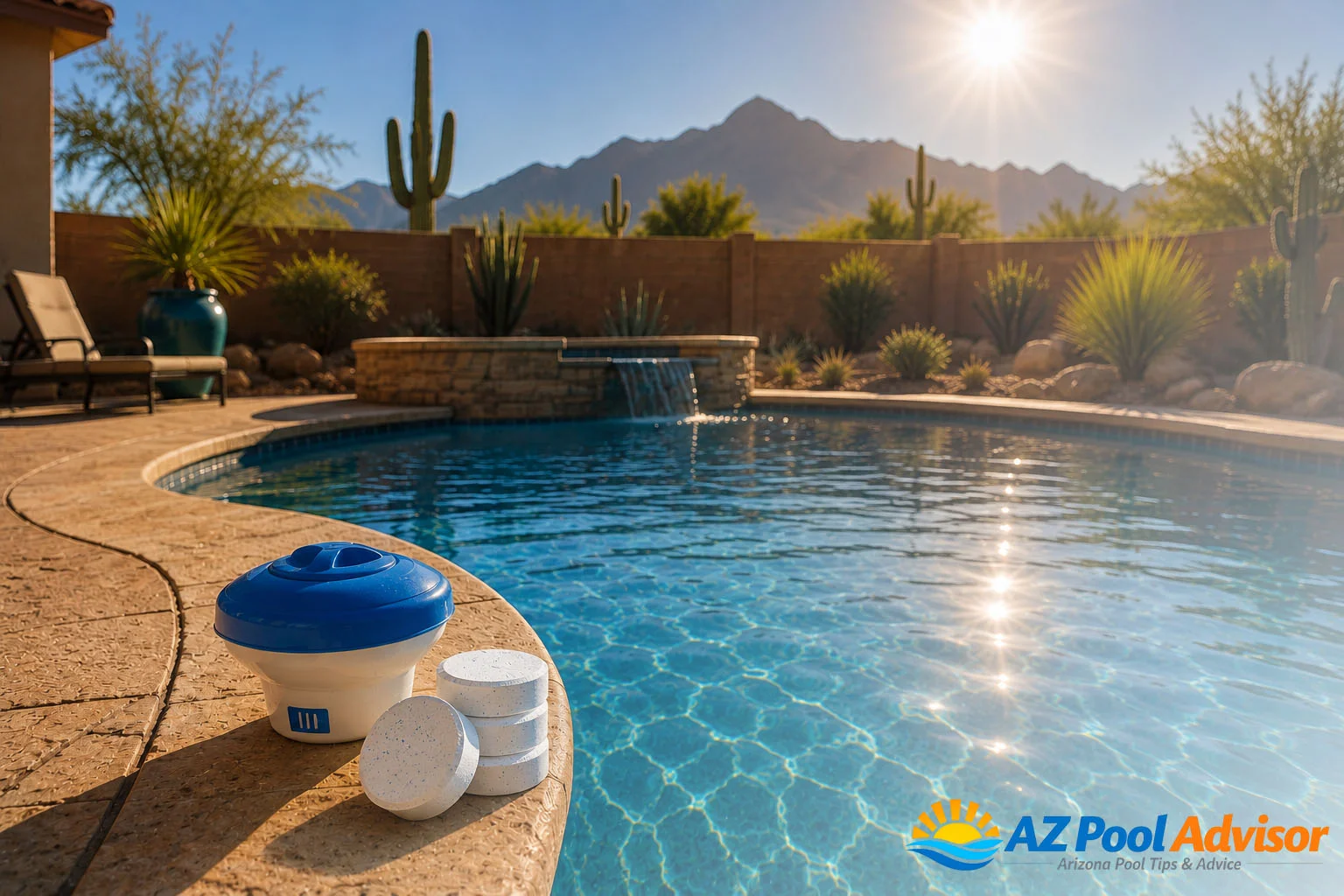
Pool stabilizer, also called cyanuric acid (CYA), helps protect chlorine from UV breakdown.
Without enough stabilizer, chlorine may disappear very quickly during periods of intense Arizona sunlight.
However, too much stabilizer can also create problems by reducing chlorine effectiveness. Maintaining balanced levels is important for overall pool chemistry.
Many homeowners test chlorine regularly but forget to monitor stabilizer levels at the same time.
Signs Your Pool May Have Low Chlorine
When chlorine levels begin dropping too low, pools may start showing early warning signs.
Common symptoms include:
- Cloudy water
- Strong chlorine odors
- Slippery pool walls
- Dull water appearance
- Small algae spots forming
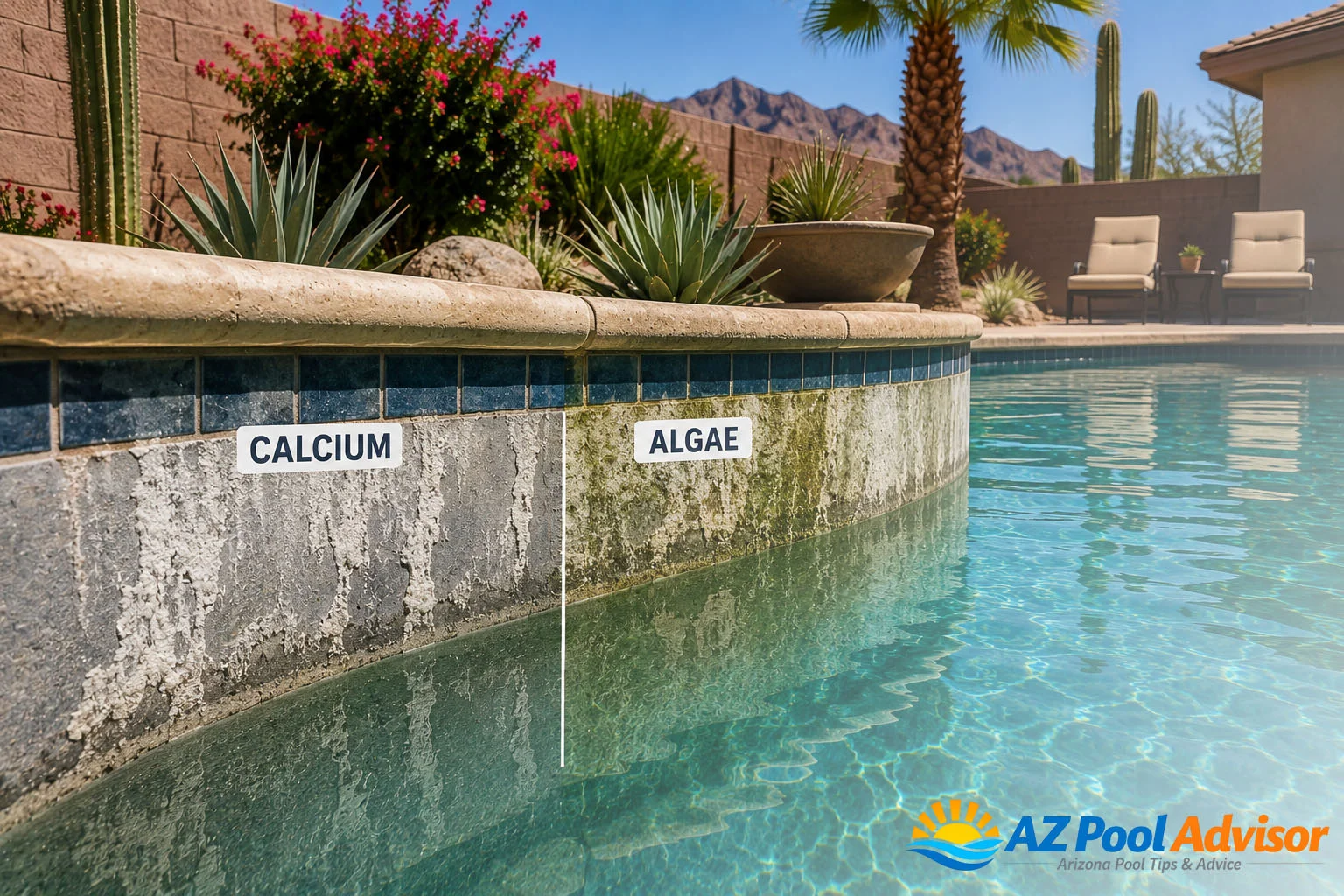
If chlorine remains low for too long, algae can begin spreading quickly in Arizona heat.
“Low chlorine levels are one of the fastest ways for algae problems to begin forming.”
How to Help Maintain Chlorine Levels
Consistent maintenance is one of the best ways to help keep chlorine levels stable during the summer.
Arizona homeowners should regularly:
- Test pool water
- Monitor chlorine levels
- Check stabilizer levels
- Brush pool walls
- Clean filters and baskets
- Remove debris quickly
Some pool owners also run pumps longer during periods of extreme heat to improve circulation and water movement.
Shock Treatments During Summer
Many Arizona pool owners use shock treatments during the summer to help restore chlorine levels and sanitize the water.
Shock treatments may help after:
- Heavy pool use
- Dust storms
- Monsoon weather
- Visible algae growth
- Cloudy water problems
Following manufacturer instructions and maintaining balanced water chemistry remain important during any treatment process.
Final Thoughts
Arizona pools face intense heat and sunlight for much of the year. These harsh conditions can quickly reduce chlorine levels and create water quality problems if maintenance falls behind.
Understanding how heat, UV exposure, and pool activity affect chlorine can help homeowners maintain cleaner and healthier pool water throughout the Arizona summer.
To learn more about healthy swimming and pool sanitation, we recommend reviewing guidance from the :contentReference[oaicite:0]{index=0}.

Brandon LaVere is a local pool owner based in Chandler, Arizona, with firsthand experience dealing with the challenges that Arizona heat, hard water, algae growth, and pool maintenance can create for homeowners. Through AZ Pool Advisor, Brandon shares practical pool care tips, real-world experiences, and Arizona-focused advice designed to help homeowners better understand and maintain their swimming pools throughout the year.
Related Posts


Previous Post
Next Post
Previous Post
Next Post