Liquid Chlorine vs Chlorine Tablets: Which Is Best for Arizona Pools?
Arizona pool owners spend a lot of time thinking about chlorine. Between triple‑digit summer days, high UV, frequent evaporation, and monsoon season blowing leaves and dust into your yard, keeping free chlorine steady is one of the most important—and most frustrating—parts of pool ownership here.
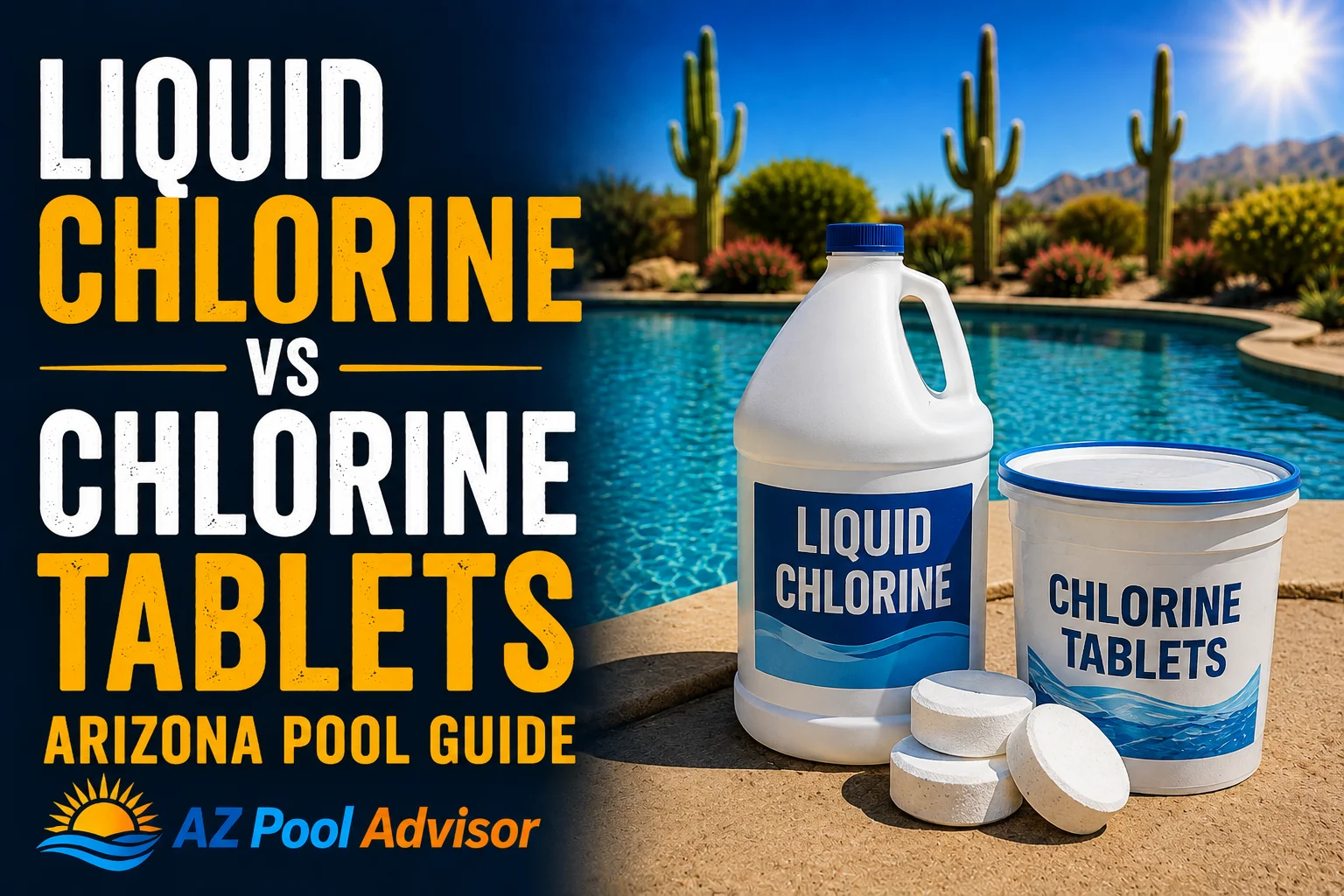
Two common options for continuous chlorination are liquid chlorine and chlorine tablets. Both deliver the same goal—sanitizing your pool—but they behave differently, require different handling, and produce different side effects. This guide helps Arizona homeowners choose the right approach for their backyard and gives practical tips for handling, dosing, and seasonal care.
Liquid chlorine vs chlorine tablets: a quick comparison
Short version: liquid chlorine (sodium hypochlorite) gives you fast, predictable chlorine without adding stabilizer, while chlorine tablets (commonly trichlor tablets) are slow‑dissolving, convenient, and add cyanuric acid (CYA). In Arizona, where sunlight and heat burn off chlorine fast, the presence—or absence—of CYA and how chemicals affect pH matter a lot.
How each product works
Liquid chlorine (sodium hypochlorite)
Liquid chlorine is a ready‑to‑use bleach solution sold in gallon jugs or drums. It adds free chlorine instantly and does not contain stabilizer (CYA). Because it’s alkaline, it tends to raise your pool’s pH slightly, so you may need to add acid occasionally to hold pH in range.
Chlorine tablets (trichloroisocyanuric acid)
Most common pool tablets are stabilized trichlor tablets that slowly dissolve in a floater, feeder, or automatic chlorinator. They add chlorine and cyanuric acid (the stabilizer that protects chlorine from sunlight) and are acidic—regular use can lower pH over time.
Pros and cons for Arizona pools
Liquid chlorine — pros
- Fast acting: raises free chlorine immediately for quick shock or routine dosing.
- No CYA buildup: you control CYA separately, avoiding long‑term accumulation.
- Good for pools with salt chlorine generators or automatic systems that need predictable FC levels.
- Better when you need to precisely raise chlorine after heavy bather use, algae, or a storm.
Liquid chlorine — cons
- Shorter shelf life: degrades over time and faster in heat—important in Arizona summer.
- Storage and safety: corrosive and alkaline—needs a shaded, ventilated area and secondary containment.
- Requires more frequent dosing in intense sun because it won’t be stabilized.
Chlorine tablets — pros
- Convenience: slow, steady chlorine delivery with simple floaters or feeders.
- Stable on the shelf: tablets keep longer than diluted liquid.
- CYA helps protect chlorine from UV—useful under Arizona sun when controlled CYA levels are desired.
Chlorine tablets — cons
- CYA buildup: continued tablet use raises cyanuric acid over time; high CYA reduces chlorine effectiveness and often forces partial drain and refill.
- Acidic: tablets lower pH and total alkalinity, requiring routine correction.
- Plaster/finish risk: tablets left in skimmers or allowed to sink can cause bleaching or etching on plaster and steps.
Arizona-specific considerations
Arizona conditions change the calculus:
- Extreme heat and high UV accelerate chlorine loss. CYA helps protect chlorine, but too much CYA causes chemical resistance—balance is key.
- High evaporation concentrates salts and minerals, potentially changing total dissolved solids over time. This has little direct effect on whether you choose liquid or tablets, but it increases the need for monitoring and occasional partial refill.
- Monsoon season dumps debris and organic load into pools. Liquid chlorine is great for quick shock after storms; tablets won’t rapidly raise FC to combat heavy contamination.
- Arizona hard water increases calcium buildup. Some tablet residues and low pH cycles can worsen scale or plaster issues if not corrected.
- Many Arizona owners run pools nearly year‑round. If you use tablets continuously, test CYA several times a year and plan periodic partial drain and refill when CYA climbs.
Practical dosing and handling tips for Arizona homeowners
Whatever you choose, testing beats guessing. Test free chlorine and CYA at least weekly in summer and after storms. Here are practical tips:
- If you use tablets, place them in an inline feeder or a well‑ventilated floater—do not store or use tablets in the skimmer or let them sit on pool steps.
- With liquid, add at the deep end or into the return flow while pump is running; avoid pouring near pool walls or finishes.
- Store chemicals shaded and dry. Liquid bleach degrades faster in heat—buy only what you’ll use in a few weeks during summer.
- After monsoon storms or heavy swim days, use liquid chlorine for quick shock and follow with testing, then resume maintenance dosing.
- Monitor CYA if you rely on trichlor tablets. If CYA gets high, the only practical fix is dilution (partial drain and refill) or switching to unstabilized chlorine for a while.
When to choose one over the other
Choose liquid chlorine if:
- You already use a salt chlorine generator or want to avoid CYA buildup.
- You need flexibility for frequent shock dosing (after storms or parties).
- You want to reduce acid additions that come from tablet use lowering pH.
Choose chlorine tablets if:
- You prefer low‑effort, steady dosing and will monitor CYA levels regularly.
- Your pool gets heavy sun and you want the built‑in UV protection of CYA—but only if you commit to periodic CYA testing and dilution when needed.
Maintenance checklist for Arizona summers
- Test free chlorine and CYA weekly; test pH and alkalinity weekly in peak heat.
- Have liquid shock on hand for storms and algae risk days.
- Inspect and clean baskets/filters frequently—monsoon debris clogs circulation, accelerating chlorine loss.
- Plan a partial drain and refill if CYA climbs above the recommended range for your pool type.
- Secure proper storage: shaded, ventilated, and out of direct sunlight. Keep chemicals separate and follow labels.
When to call a pro
If your pool keeps going green despite routine dosing, or your CYA is skyrocketing and you’re unsure about drain timing, contact a local pool service. Arizona‑based pros understand aggressive sunlight, hard water, and seasonal debris patterns and can recommend the right chemical strategy or perform a partial drain and refill safely.
FAQ
Do chlorine tablets damage salt cells?
Regular use of trichlor tablets can raise CYA and leave acidic residues that may reduce salt‑cell efficiency over time. Many salt‑cell owners avoid continuous tablet use and rely on liquid or the salt system itself, using tablets only occasionally. Test CYA and consult your salt system manual or installer.
How often should I test CYA if I use tablets?
Test CYA at least every 1–3 months, and more often during heavy summer use. High UV and steady tablet dosing can push levels up slowly—catch it early to avoid dilution work later.
Which is cheaper: tablets or liquid?
Cost depends on purchase size and local pricing. Tablets may be cheaper per pound of chlorine and are convenient, but hidden costs include more acid for pH correction and the potential need to refill water if CYA grows too high. Liquid has a shorter shelf life but avoids CYA costs. Price isn’t the only factor—consider convenience, storage, and long‑term maintenance.
Can I use both products together?
Yes—many homeowners use liquid for shock and quick raises, and tablets for daily maintenance—but be mindful that regular tablet use will raise CYA. If you choose a mixed approach, test CYA and pH more often.
Arizona pool care is about balance: fast responses to storms and heat, steady maintenance, and regular testing. For more local tips and trusted Arizona pool companies that can help with chemical balancing or partial drain and fills, explore AZ Pool Advisor’s resources and directory.